For hotels, mattress replacement is more than a purchasing decision. A renovation can generate dozens or hundreds of mattresses and box springs, and sending them to a landfill may create avoidable costs, compliance concerns, and environmental impacts. Understanding Mattress Recycling Requirements for Hotels in Riverside CA helps owners, general managers, and renovation teams plan removal correctly and document responsible handling. California’s mattress recovery system is supported by the Mattress Recycling Council (MRC), while local haulers and waste agencies may impose additional rules for commercial properties. This guide explains how MRC programs work, what Riverside-area hotels should confirm before scheduling a pickup, how to prepare mattresses for recycling, and why using an experienced hotel service provider can simplify the entire project.
Mattress Recycling Requirements for Hotels in Riverside CA: What the MRC Covers
The Mattress Recycling Council administers California’s statewide mattress recycling program, commonly known as Bye Bye Mattress. The program was created under California’s Used Mattress Recovery and Recycling Act to increase the recovery of discarded mattresses and box springs. MRC works with approved recyclers, collection sites, transporters, retailers, and other partners to keep usable materials out of landfills.
For hotels, the important point is that commercial mattress removal is not always handled the same way as a household drop-off. A hotel may be replacing a small number of damaged units, clearing rooms during a renovation, or removing a complete inventory of mattresses and foundations. The quantity, condition, location, and transportation method can affect which MRC option is appropriate.
Is a hotel required to use the MRC?
Hotels should distinguish between a legal requirement and a recognized recycling pathway. California law establishes the mattress recycling framework, but it does not mean every hotel must personally register with the MRC or arrange a direct MRC pickup. In many cases, a commercial hauler, mattress recycler, retailer, or hotel liquidation company coordinates the process.
Nevertheless, properties should not assume that any waste vendor can legally accept mattresses. Confirm that the vendor has an appropriate disposal or recycling arrangement and can explain where the material will go. The MRC’s current commercial guidance and approved-partner information should be checked before a large project, because program rules, accepted materials, fees, and service areas can change.
What materials are typically accepted?
Mattress recycling programs generally focus on standard mattresses and box springs, including many innerspring, foam, and hybrid products. Components such as steel, wood, foam, cotton, and fiber can often be separated and recovered. However, heavily contaminated, wet, infested, or hazardous items may be rejected or require special handling. Adjustable bases, bed frames, sleeper sofas, and furniture are not automatically treated as mattresses.
When planning mattress recycling Riverside CA projects, ask in advance about accepted products, preparation requirements, loading procedures, minimum quantities, and charges. Written confirmation reduces surprises during a busy renovation.
Understanding the MRC Commercial Volume Program
The MRC commercial volume program is designed for businesses and organizations that need to recycle multiple mattresses and foundations rather than taking a few items to a consumer drop-off location. Hotels are a natural fit because room renovations can create concentrated volumes in a short period.
Commercial service commonly involves coordinating a pickup, delivery, or drop-off based on the quantity and location of the material. The exact process depends on the MRC’s current terms and the participating recycler or service provider. A Riverside hotel should request current instructions directly from MRC or through its qualified recycling partner before scheduling trucks.
Information to gather before requesting service
- The hotel’s exact address, loading area, and access restrictions.
- The number of mattresses, box springs, and other bedding components.
- Dimensions and types of the units, including king, queen, full, twin, foam, or hybrid models.
- Whether items are clean, dry, bagged, stacked, damaged, or contaminated.
- The desired removal date and whether rooms will remain occupied.
- Available dock access, elevators, stairs, parking limitations, and truck clearance.
- Whether the hotel needs certificates, receipts, weight tickets, or project photographs.
These details allow the recycler or hauler to select suitable equipment and estimate labor. They also help identify items that should be diverted for reuse instead of immediately entering the recycling stream. Commercial mattresses that are clean, structurally sound, and consistent with resale standards may have a second-life opportunity, although resale and donation decisions must follow applicable health, safety, and business policies.
Fees and documentation
Do not assume that a commercial pickup is free simply because California has a mattress recycling program. Transportation, labor, sorting, contamination, emergency scheduling, and loading conditions may create separate charges. Ask for a written quote that distinguishes recycling fees from removal and labor costs.
For hotel accounting and sustainability reporting, retain the service confirmation, invoice, receipt, weight ticket, and any recycling documentation. A reliable provider should be able to explain whether materials were sent to an approved recycler, transferred for reuse, or handled through another lawful channel.
Riverside CA Hotel Recycling: Local Planning and Compliance
Riverside CA hotel recycling projects must account for both state requirements and local logistics. The City of Riverside, Riverside County, and neighboring cities may use different commercial waste contracts, franchise haulers, transfer stations, or recycling arrangements. A property located in the City of Riverside may have different service procedures from a hotel in Moreno Valley, Corona, Jurupa Valley, or an unincorporated county area.
Before placing mattresses near a public alley, loading dock, or waste enclosure, contact the property’s contracted hauler or the appropriate local waste authority. Ask whether mattresses can be placed in a commercial container, whether advance notification is required, and whether the hauler provides a dedicated bulky-item or recycling service. Never place mattresses in ordinary trash containers unless the authorized hauler specifically approves that method.
A Riverside renovation example
Consider a 120-room Riverside hotel replacing beds in phases. If 120 mattresses and 120 foundations are removed at once, the project team must plan more than a truck. Staff need a staging area that is dry and secure, a route from guest rooms to the loading point, protection for corridors and elevators, and a pickup window that does not conflict with check-in. If the items are stacked outdoors in rain or exposed to pests, recyclable materials may become contaminated and incur additional handling costs.
A phased plan may be more efficient: remove mattresses from one floor, inspect and sort them, load the approved materials, and then release the next floor for installation. This approach limits hallway congestion and allows the hotel to continue operating. It is especially useful for properties near busy hospitality corridors, event venues, or major Riverside transportation routes where truck access and guest traffic require careful coordination.
Other California waste rules to keep in mind
California’s broader waste regulations may affect construction debris, electronics, appliances, treated wood, and organic materials generated during the same renovation. Those items should be separated rather than placed with mattresses. Mattress recycling does not replace requirements that may apply to demolition waste, hazardous materials, refrigerants, or electronic equipment.
For a large renovation, the hotel’s contractor should create a written waste management plan identifying each material stream and its destination. The plan should name responsible vendors and explain how receipts will be collected. If requirements are unclear, consult the local waste agency, the project’s environmental consultant, or a qualified commercial recycler.
How to Prepare Mattresses for Hotel Removal and Recycling
Good preparation makes hotel mattress disposal safer, faster, and more economical. Begin with an inventory. Count mattresses separately from box springs and foundations, record their sizes, and note any units that are wet, torn, stained, infested, or otherwise unsuitable for ordinary recycling.
Use a clear sorting system
Label each group as one of the following:
- Recycle: clean and dry mattresses or foundations accepted by the scheduled recycler.
- Reuse or resale review: clean, intact commercial units that may have value under the buyer’s standards.
- Special handling: wet, moldy, bedbug-infested, heavily soiled, or damaged items requiring advance approval.
- Other furniture: bed frames, headboards, sofa beds, adjustable bases, and unrelated furnishings.
Do not mix mattresses with bed frames, lamps, televisions, appliances, or demolition debris. Mixed loads slow sorting and can result in rejected material. Keep mattresses dry and protect them from additional contamination while they wait for pickup. Follow the recycler’s instructions about plastic wrapping; some programs may require protection during transport, while unnecessary wrapping can create extra waste or labor.
Protect guests, employees, and the building
Hotel removal crews should use safe lifting practices and suitable carts. Establish a one-way route where possible, reserve elevators during the move, and cover vulnerable flooring or wall surfaces. Keep mattresses away from food preparation areas and public spaces. If a pest issue is suspected, isolate the units and notify the recycler before moving them through guest corridors.
Photograph the staging area and final loaded truck when appropriate. These records can support internal sustainability reports and help resolve disputes about quantity or condition. A professional crew should also leave the loading area broom-clean and remove all wrapping, straps, and debris created during the work.
Choosing a Hotel Mattress Recycling and Removal Partner
Searching for hotel mattress disposal Riverside services may produce general junk-removal companies, but hotel projects require more specialized coordination. Ask whether the provider regularly handles commercial lodging properties, bulk room removals, box springs, phased renovations, and operating hotels. Experience matters because a low per-item price can be offset by delays, damage, missed pickups, or rejected loads.
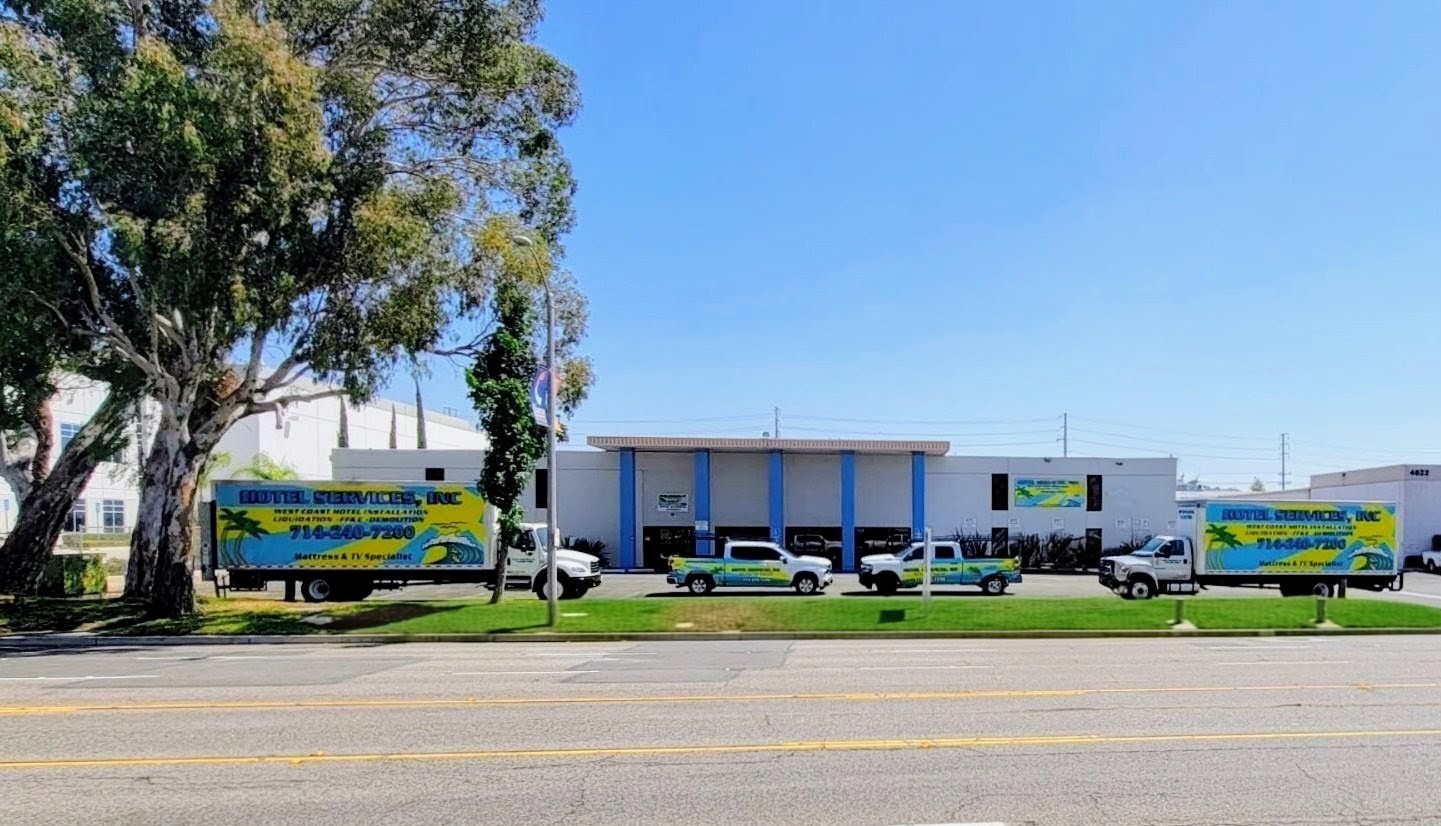
Hotel Services Inc. provides mattress liquidation, removal, installation, FF&E support, and recycling coordination for hotels, motels, and resorts. Based in Anaheim, the company serves Southern California and offers nationwide installation capabilities. Its crews can help organize removal around renovation schedules, protect floors and walls, and coordinate mattresses with other furnishings being liquidated or replaced.
Hotel Services Inc. works with recycling partners including MBC Mattress Recycling and Gateway Mattress Recycling. Depending on the inventory and condition, the company can help determine whether items are appropriate for recycling, resale, or another responsible disposition. Hotels purchasing repurposed furnishings may also qualify for the company’s Green Certificate Program, which can support sustainability messaging.
When comparing vendors, request answers to these questions:
- Who will physically remove and transport the mattresses?
- Which recycler or downstream facility will receive them?
- Are recycling, transportation, labor, and sorting charges itemized?
- Can the crew work during a phased renovation or around occupied rooms?
- What documentation will the hotel receive after completion?
- Is the work covered by a service guarantee?
Hotel Services Inc. offers free consultations and detailed estimates, with per-item pricing rather than hourly billing. To discuss a Riverside project, call (714) 541-7600 or 888-238-5252. For bid estimates, contact John at (949) 310-2277 or (714) 240-7200. Spanish-language assistance is also available.
Conclusion: Plan Riverside Mattress Recycling Before the Renovation
California’s mattress recovery system gives hotels a practical path to divert mattresses and box springs from disposal, but successful compliance depends on advance planning. Confirm the current MRC commercial requirements, verify local Riverside hauling procedures, separate mattresses from other furnishings, and document the final disposition. Most importantly, schedule removal before rooms, corridors, and loading areas become crowded with renovation materials.
For help with Mattress Recycling Requirements for Hotels in Riverside CA, Hotel Services Inc. can coordinate bulk removal, recycling, liquidation, installation, and related FF&E services through one experienced team. Request a project consultation at hotelserviceinc.com or call the numbers above to discuss inventory, timing, access conditions, and responsible recycling options.