For San Jose Hotels, a major renovation is rarely just a design project. It is a live operational transition involving guest-room furniture, mattresses, lighting, artwork, appliances, televisions, case goods, contractor schedules, freight access, storage, inspections, and guest expectations. When those moving parts are not coordinated, a property can lose rooms, delay reopening dates, damage finished surfaces, or create an avoidable impression of disruption.
The challenge becomes more significant in a city with an active events calendar, a growing downtown hospitality market, and complex commercial permitting requirements. San Jose Hotels renovating near the McEnery Convention Center, SAP Center, or major business districts may need to schedule deliveries around high-demand periods while keeping elevators, loading zones, hallways, and guest floors functional. This guide explains why local logistics matter, how FF&E installation affects the hotel furniture installation timeline, and how an experienced hospitality partner can make San Jose hotel renovation coordination more predictable.
Why San Jose Hotels Need a Local FF&E Strategy
FF&E—furniture, fixtures, and equipment—is often treated as the final stage of a renovation. In practice, it should influence the project from the beginning. A room cannot be released for sale simply because painting is complete. Beds, nightstands, desks, seating, lamps, televisions, artwork, mirrors, window treatments, and accessories must arrive, be installed, inspected, and documented.
For San Jose Hotels, local conditions can make that process especially sensitive. Downtown properties may have limited staging space, shared loading areas, narrow service corridors, and strict rules for moving materials through occupied buildings. A suburban property may have more parking but still face challenges involving long corridors, multiple buildings, or restricted delivery windows.
Local knowledge helps answer practical questions before trucks arrive:
- Where can delivery vehicles safely stage without blocking hotel operations?
- Which freight elevator or service entrance should crews use?
- How will materials move from the dock to each room?
- Where can furniture be inspected before installation?
- What rooms can be completed without interfering with guests?
- How will damaged or surplus items be separated for return, recycling, or liquidation?
These details directly affect labor costs and schedule reliability. A crew that arrives without a room-by-room plan may spend hours waiting for access, moving furniture more than once, or discovering that items do not match the approved layout. By contrast, a coordinated FF&E installation San Jose plan assigns responsibilities, confirms quantities, sequences deliveries, and establishes quality-control checkpoints before installation begins.
Renovation is an operational project, not only a construction project
A hotel must continue serving guests while work is underway. That means the FF&E team must understand housekeeping routes, fire exits, guest privacy, elevator usage, noise limits, and daily room-release procedures. Professional, uniformed crews also help reassure guests and hotel employees that the renovation is controlled rather than improvised.
San Jose Permits, Events, and Access Can Change the Schedule
Not every hotel improvement requires a building permit, but the City of San José states that permits are required for structural changes, demolitions, and most plumbing, mechanical, and electrical improvements. Cosmetic work such as painting, new flooring, and countertops may be treated differently. Reviewing the scope early with the project team helps prevent an FF&E delivery schedule from being built around an unrealistic construction completion date. The city’s commercial building permit guidance is a useful starting point for identifying when approvals may affect sequencing.
The city also notes that the 2025 Building Codes became effective on January 1, 2026. For renovation teams, that creates another reason to confirm current requirements rather than relying on an older project template or assumptions from a previous property renovation.
Events create a second scheduling variable. The San Jose McEnery Convention Center hosts hundreds of events each year, including technology conferences, tradeshows, meetings, and large fan events, according to Visit San Jose’s convention center information. During busy periods, nearby hotels may experience higher occupancy, more group arrivals, heavier traffic, and less flexibility for noisy or disruptive work.
That matters when developing a hotel furniture installation timeline. A plan that looks efficient on paper may fail if it requires freight deliveries during a convention move-in, guest-room access during peak occupancy, or multiple trucks at a congested downtown loading area. A local logistics partner can help the hotel team build around those constraints by confirming access windows, staging locations, elevator availability, and room-release targets.
Build the schedule backward from the reopening date
Successful San Jose hotel renovation coordination usually begins with the final operational milestone and works backward. If a floor must reopen on a Monday, the team should establish when furniture arrives, when rooms are installed, when inspections occur, when punch-list corrections are completed, and when housekeeping performs final turnover.
Allowances should also be made for receiving discrepancies, missing hardware, freight damage, room changes, and late construction handoffs. A schedule without contingency time is not efficient; it is fragile.
What a Complete FF&E Installation Plan Should Include
A comprehensive FF&E plan connects procurement, transportation, installation, inspection, and closeout. It should not end when the furniture reaches the property. Every item must be matched to the correct room or public space, installed according to specifications, and reviewed for condition and function.
Room-by-room control
Room maps and installation checklists are essential for large hotel renovations. They help crews identify the correct bed size, case-good configuration, seating package, artwork placement, television location, and accessory set. They also create a record for the owner or general contractor when rooms are released.
For larger projects, the workflow may include:
- Confirm approved furniture schedules, floor plans, and installation standards.
- Verify quantities, dimensions, finishes, and hardware before shipping.
- Inspect delivery loads and separate damaged or incorrect items.
- Protect floors, walls, doors, elevators, and finished corridors.
- Install furniture and equipment by room or designated zone.
- Secure televisions, artwork, headboards, and other wall-mounted items.
- Complete quality-control inspections and record deficiencies.
- Remove packaging, debris, and replaced furnishings from the property.
- Obtain sign-off before the room is returned to housekeeping or inventory.
Coordination with contractors and hotel operations
FF&E installers should communicate with the general contractor, project manager, housekeeping leadership, engineering department, and hotel management. For example, a bed cannot be installed correctly if the flooring is unfinished, wall protection is incomplete, or electrical work near the nightstand is still open.
Likewise, public-area installations may require coordination with banquet operations, restaurants, meeting rooms, and front-desk teams. This is why commercial furniture logistics California projects often benefit from one accountable partner rather than several disconnected vendors.
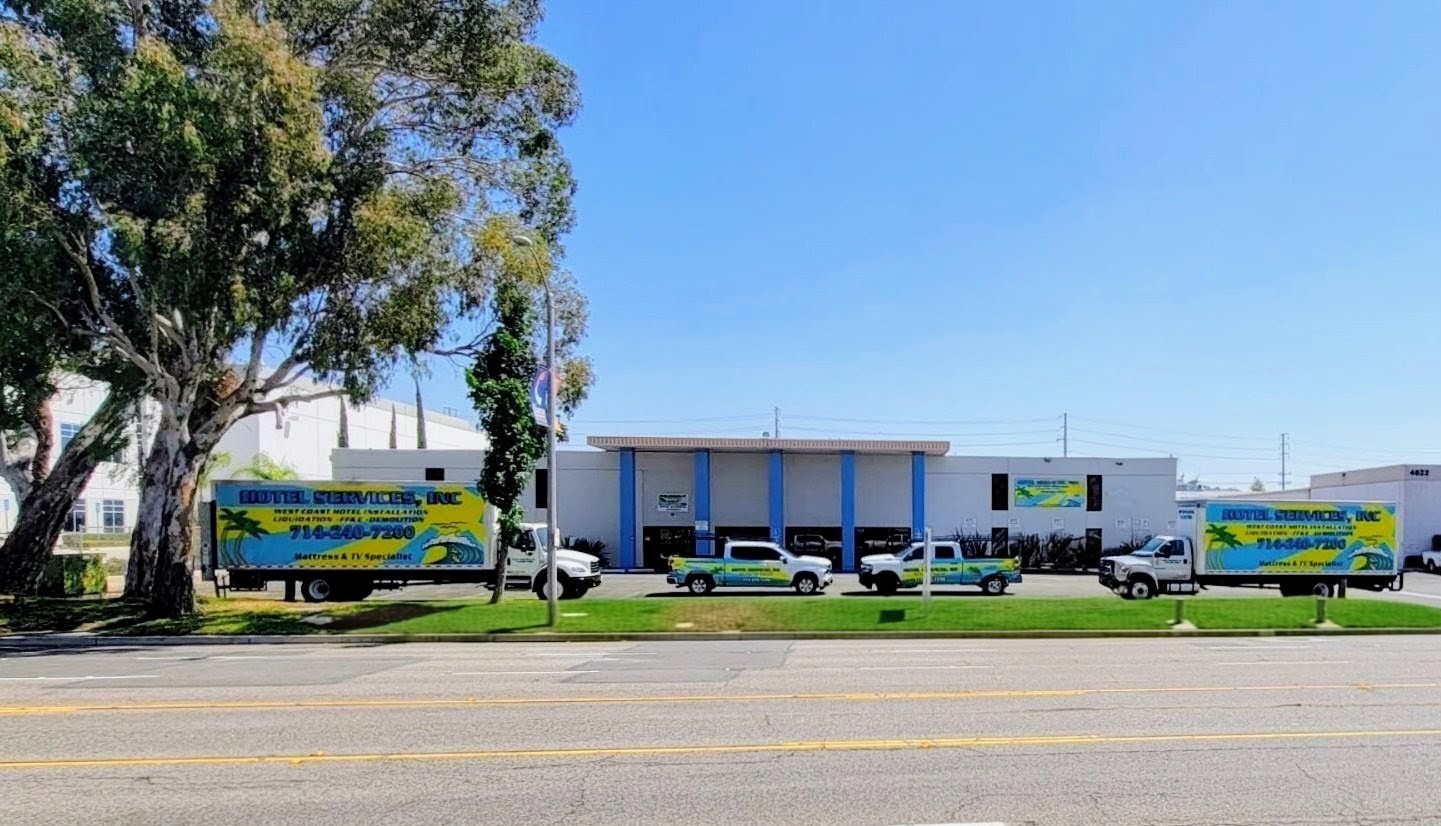
Hotel Services Inc. approaches this work as a complete furnishing service. Its capabilities include contractor coordination, case-goods movement, full-room outfitting, quality inspections, timeline management, secure mounting, and nationwide installation. The company’s experience includes replacing nearly 1,000 beds at Hotel del Coronado in 2010—an example of the scale and organization required when guest-room assets must be changed efficiently.
Reducing Waste and Cost During a San Jose Hotel Renovation
Renovations create two logistics streams: the new FF&E coming in and the existing furniture, mattresses, fixtures, and equipment going out. Treating removal as an afterthought can create storage problems, safety concerns, landfill costs, and delays for the installation crew.
A better approach begins with an asset disposition plan. Items may be sold, donated, repurposed, recycled, or removed as demolition debris depending on condition and ownership requirements. A professional liquidation assessment can identify value in beds, couches, chairs, lamps, artwork, patio furniture, televisions, appliances, air conditioners, and other commercial-grade furnishings.
Mattresses deserve particular attention. During a large San Jose hotel renovation, dozens or hundreds of mattresses may need to leave the property in a short period. Separating mattresses and box springs from general debris can support recycling and reduce landfill volume. Hotel Services Inc. works with MBC Mattress Recycling and Gateway Mattress Recycling to provide recycling options and help give usable materials a second life.
Repurposing can also support budget control. Quality used furniture sourced from four- and five-star hotels may provide a lower-cost option for back-of-house areas, staff housing, independent properties, short-term rentals, or replacement rooms. For qualifying purchases of repurposed furnishings, the company’s Green Certificate Program can provide an additional sustainability and marketing benefit.
Why removal must be scheduled with installation
Removal and installation should be sequenced together. If old furniture is removed too early, rooms may be unavailable longer than necessary. If it is removed too late, new items may have nowhere to go. A coordinated crew can complete staged removals, protect the property during transport, and keep corridors clear for incoming materials.
This integrated model is particularly useful for San Jose Hotels operating in phases. One floor can be cleared, installed, inspected, and released before the next floor begins. The result is a more manageable hotel furniture installation timeline and fewer surprises for management.
Choosing the Right Partner for FF&E Installation San Jose
The right logistics provider should offer more than labor. Hotel owners and general contractors need a partner that understands hospitality standards, communicates clearly, protects the property, and can adapt when construction or occupancy conditions change.
Before selecting a provider, ask whether the team can:
- Work around occupied guest rooms and active hotel operations.
- Provide a detailed scope, pricing structure, and schedule.
- Coordinate with contractors, hotel management, and housekeeping.
- Handle both installation and removal of existing FF&E.
- Protect finished surfaces during movement and staging.
- Perform quality inspections and correct punch-list items.
- Provide mattress removal, recycling, demolition, or debris coordination.
- Scale from a single-day mattress installation to a full-property renovation.
- Support projects outside the immediate market when ownership groups have multiple properties.
Hotel Services Inc. is based in Anaheim, California, and provides coast-to-coast hospitality services, including furniture liquidation, FF&E installation, mattress services, recycling, demolition, and furniture sales. Its crews work in English and Spanish, offer a 100% Guarantee on all work, and focus on on-time delivery, professional conduct, and minimizing guest disruption.
For San Jose hotel operators, that combination can simplify communication between the property, construction team, and logistics provider. Instead of treating delivery, installation, removal, and recycling as separate tasks, the hotel can manage them as one coordinated furnishing plan.
Conclusion: Make Local Logistics Part of the Renovation Plan
Major renovations succeed when the operational details receive the same attention as design and construction. For San Jose Hotels, local traffic, event demand, commercial access, permitting, occupancy patterns, and limited staging areas can all affect the final outcome. FF&E is not simply the last item on the construction checklist; it is the process that turns completed rooms into sellable rooms.
Hotel Services Inc. helps hotels plan and execute that transition with professional installation, furniture liquidation, mattress services, recycling, demolition coordination, and nationwide support. To discuss a San Jose hotel renovation, request a bid estimate from John at (949) 310-2277 or (714) 240-7200, or contact Hotel Services Inc. at (714) 541-7600 or (888) 238-5252. A detailed logistics plan early in the project can protect the schedule, reduce disruption, and help the property reopen each renovated space with confidence.