Hotel owners and operators often face a difficult choice during a renovation: purchase new budget furniture at the lowest possible price, or invest in carefully selected pieces previously used in a four- or five-star property. At first glance, new furniture may seem like the safer option. However, hotel furniture depreciation can make high-quality used case goods, seating, beds, and accessories a better financial decision over the life of a property.
The difference comes down to construction, performance, replacement cycles, and total ownership cost. Commercial furniture sourced from an upscale hotel has already absorbed much of its initial depreciation while retaining the durability and design standards that made it suitable for demanding guest environments. This guide explains how hotel furniture loses value, why used 5-star pieces can outperform new budget options, and how to evaluate commercial furniture ROI before making a purchase.
Hotel Furniture Depreciation: Understanding the Real Cost of “New”
Depreciation is the decline in an asset’s value over time. In hospitality, that decline is influenced not only by age but also by appearance, condition, brand, construction quality, maintenance history, and how well the furniture fits current guest expectations. New furniture typically experiences its steepest loss in value shortly after purchase. By contrast, quality used hotel furniture may already be priced closer to its practical resale value.
Why the lowest purchase price is not always the lowest cost
New budget furniture can have a lower invoice price, but that number does not tell the entire story. Less expensive pieces may use thinner veneers, weaker hardware, lightweight substrates, or residential-grade components that are not designed for constant commercial use. If drawers fail, chair frames loosen, or tables show damage quickly, the property may face repair, replacement, labor, and room-out-of-service expenses.
By comparison, furniture removed from an established 4- or 5-star hotel is often built for repeated use, frequent cleaning, and consistent guest turnover. Although the pieces are not new, their original specifications may include reinforced construction, durable finishes, commercial hardware, and timeless designs. When professionally inspected and priced appropriately, they can provide more usable service years than newly manufactured low-cost alternatives.
Depreciation and accounting are not the same as usefulness
Book value and practical value can differ. A furnishing may be fully depreciated for accounting purposes while remaining attractive, functional, and valuable to an independent hotel, motel, extended-stay property, vacation rental, or staged home. This is one reason liquidated furniture resale value can remain meaningful after a major property renovation.
Operators should therefore evaluate more than age. Ask how the item was used, whether it was maintained, how it will perform in the intended room, and what it would cost to replace with a comparable commercial-grade product today. Those answers often reveal why a used premium piece can be a stronger investment than new furniture designed primarily around a low retail price.
Why Used 5-Star Hotel Furniture Often Performs Better
Upscale hotels compete through the guest experience, and furniture is a visible part of that experience. A substantial nightstand, well-finished dresser, supportive lounge chair, or professionally upholstered sofa can make a room feel more comfortable and credible. These details matter even more when a property is trying to improve its online reviews, attract corporate travelers, or compete with renovated hotels in the same market.
Commercial-grade construction is built for hospitality
Furniture specified for luxury and upper-upscale properties generally must withstand more than occasional residential use. Guest rooms are cleaned repeatedly, luggage is moved in and out, drawers are opened hundreds of times, and seating is used by people of different sizes and habits. As a result, many premium hotel pieces feature durable laminates or veneers, reinforced joints, commercial hinges, heavy-duty slides, and finishes selected for long-term maintenance.
A new budget item may look comparable in a catalog photograph, yet the difference becomes apparent after months of operation. A used 5-star piece may have surface wear, but its core structure can remain considerably stronger. Cosmetic imperfections can often be repaired, refinished, or incorporated into a room refresh. Structural failures are more expensive and disruptive to address.
Design quality can extend the useful life
Trendy furniture can date a room quickly. Neutral palettes, balanced proportions, and classic silhouettes tend to remain usable through multiple design cycles. This flexibility reduces the need for a complete replacement every time the property updates paint, flooring, lighting, or soft goods.
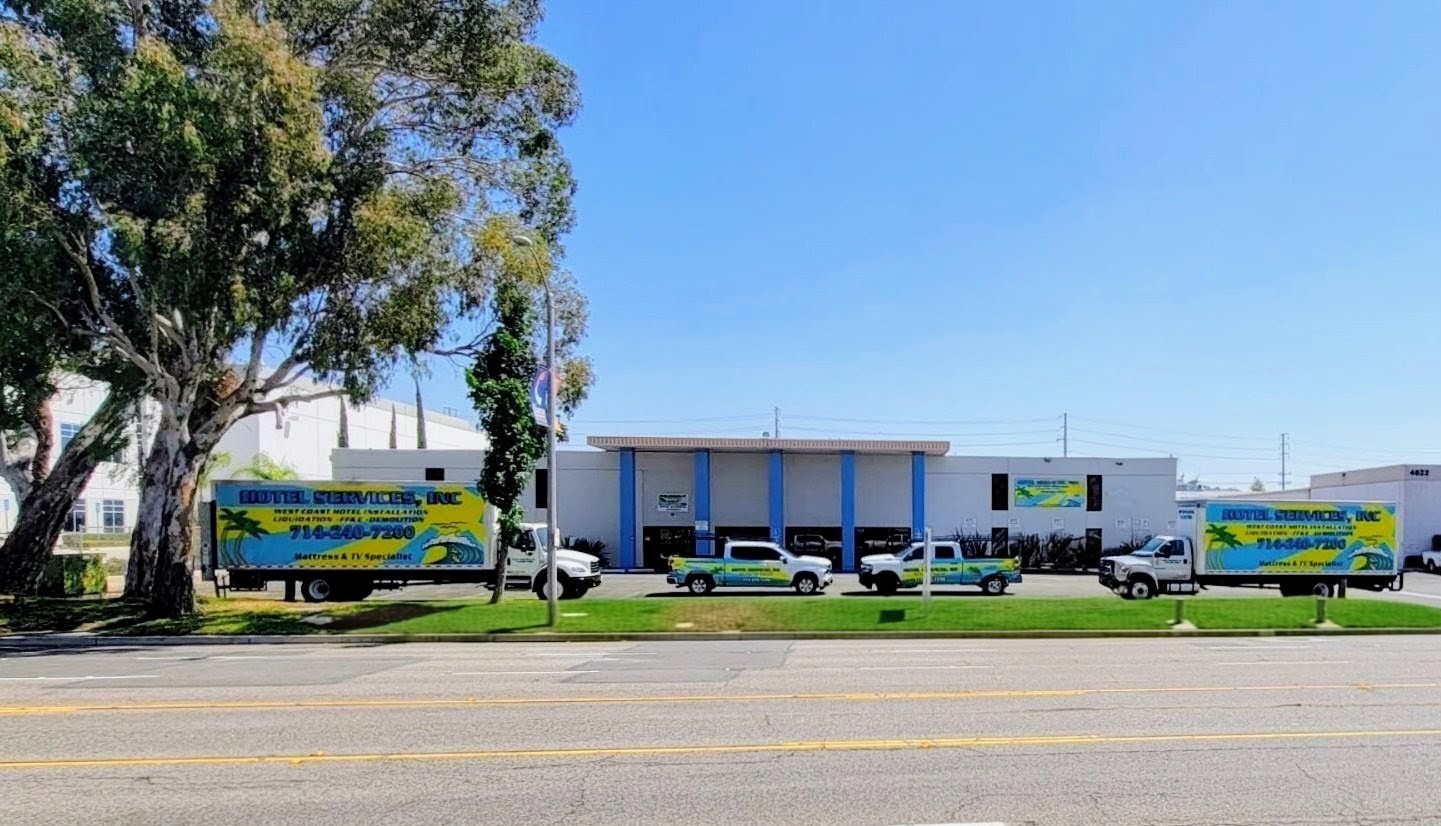
Used inventory can also create a more distinctive guest room than mass-produced budget collections. Hotel Services Inc. sources furniture from four- and five-star hotels, including beds, case goods, couches, chairs, lamps, artwork, TVs, appliances, patio furniture, and sofa beds. Selecting coordinated pieces from a professional inventory allows operators to achieve a polished look without paying the full cost of new custom or commercial collections.
- Better durability: Commercial construction is designed for frequent use.
- Lower acquisition cost: Previous depreciation reduces the purchase price.
- More credible presentation: Premium materials and proportions support a higher-quality guest experience.
- Faster furnishing: Available inventory can shorten procurement timelines.
- Greater flexibility: Selected used pieces can complement renovations, replacements, or phased upgrades.
Used vs. New Hotel Furniture Value: Measuring Total Ownership Cost
Comparing used vs. new hotel furniture value requires more than placing two purchase prices side by side. A useful analysis considers acquisition, transportation, installation, maintenance, replacement frequency, downtime, and expected resale value. The lowest-priced item may become the most expensive if it must be repaired or replaced repeatedly.
A practical hotel furniture ROI formula
To estimate commercial furniture ROI, start with the expected usable life of each option. Add the purchase price to delivery, installation, protection, repairs, and anticipated replacement costs. Then compare that total with the number of room-years or guest stays the furniture is expected to support.
For example, a new budget dresser may cost less initially but require replacement after several years of heavy use. A used commercial dresser may cost more than the budget option while lasting significantly longer. If the used piece also retains resale value or can be relocated to another property, its effective cost per year may be lower.
Operators should also account for operational disruption. Furniture failure can require a room to be taken out of service, a maintenance employee to make repeated repairs, or a manager to handle guest complaints. Those indirect costs are easy to overlook in a purchasing comparison.
Questions to ask before buying
- Is the furniture commercial-grade and appropriate for the intended property?
- What materials, hardware, and joinery are used?
- Has each piece been inspected for structural damage, odors, stains, pests, and excessive wear?
- Are replacement parts or matching pieces available?
- Will the dimensions work with existing room layouts, doors, elevators, and corridors?
- What are the delivery, installation, and removal costs?
- Can the supplier provide an itemized quote and clear condition information?
- What happens to the furniture if the property changes design direction later?
Professional sourcing is particularly valuable for multi-room projects. A supplier that understands hospitality layouts can help identify compatible sets, plan quantities, coordinate delivery, and reduce the risk of receiving attractive pieces that do not fit the room or schedule.
Hotel FF&E Investment Returns and the Sustainability Advantage
Furniture, fixtures, and equipment represent a significant portion of a hotel renovation budget. Strong hotel FF&E investment returns depend on choosing items that support guest satisfaction while controlling capital expenditure. Repurposed furniture can help achieve both goals when it is selected carefully and installed professionally.
Reuse reduces waste and supports responsible operations
Replacing an entire hotel inventory can send tons of usable furniture and mattresses to landfills. Purchasing quality used items gives those assets a second life and reduces the environmental impact associated with manufacturing, packaging, and disposing of new products. It can also support a property’s sustainability messaging, especially when guests and corporate clients increasingly consider environmental practices.
Hotel Services Inc. offers a Green Certificate Program for hotels that purchase repurposed furnishings. The certificate recognizes the property’s reuse effort and can provide a tangible marketing point for environmentally conscious travelers and business partners.
Responsible removal is part of the investment
The sustainability and financial benefits of reuse depend on efficient logistics. A professional crew should protect floors, walls, doors, elevators, and public areas during removal and installation. It should also separate reusable furnishings from damaged materials and coordinate recycling where appropriate.
Hotel Services Inc. works with MBC Mattress Recycling and Gateway Mattress Recycling to help divert mattresses and furniture from landfills. Its services include hotel furniture liquidation, mattress removal and recycling, demolition support, FF&E movement, and nationwide installation. This complete approach can simplify a renovation by placing removal, resale, recycling, and replacement coordination with one experienced partner.
There is also a practical scheduling benefit. Well-organized crews can remove old furnishings and install replacement items with minimal guest disruption. For properties operating under a tight renovation calendar, completing work on time—or ahead of schedule—can protect occupancy and revenue while reducing stress for staff.
How to Source and Install Used Hotel Furniture Successfully
The best results come from treating used furniture as a planned FF&E project rather than an opportunistic purchase. Begin by documenting room dimensions, required quantities, preferred finishes, accessibility needs, and the property’s design goals. Photos and measurements of existing rooms can help a supplier recommend pieces that integrate with current fixtures and finishes.
Inspect condition and consistency
Inspect sample pieces before committing to a large order whenever possible. Look for stable frames, functioning hardware, clean surfaces, secure joints, even finishes, and signs of moisture or pest damage. For upholstered furniture, evaluate fabric condition, odor, seams, cushions, and the availability of professional cleaning or reupholstery.
Consistency matters in hospitality. A property may need matching nightstands, beds, lamps, or dressers across dozens of rooms. If exact matching is not possible, a thoughtful combination of complementary pieces can create a deliberate design rather than an inconsistent one.
Plan delivery, installation, and final inspection
Installation is more than placing furniture in a room. Crews may need to assemble beds, position case goods, mount headboards, secure artwork, install televisions, and protect walls and floors. Properly secured flat-screen TVs, headboards, and wall-mounted items can help prevent accidental damage and theft.
Before accepting the completed project, conduct a room-by-room inspection. Confirm that drawers open, doors close, furniture is stable, electrical items work, and all pieces match the approved layout. A detailed checklist helps identify issues while the installation crew is still on site.
For operators without an internal project team, Hotel Services Inc. provides FF&E planning, contractor coordination, sourcing, quality inspections, and professional installation. The company serves hotels, motels, resorts, and other hospitality properties nationwide, with coast-to-coast installation support and bilingual service available in English and Spanish.
Conclusion: Make Depreciation Work for Your Hotel
Hotel furniture depreciation does not automatically make used furniture a poor investment. In many cases, it creates an opportunity to acquire durable, design-forward commercial pieces after their steepest value decline has already occurred. Used 5-star furniture can deliver a stronger balance of appearance, longevity, sustainability, and cost than new budget products that may require earlier replacement.
To compare your options, evaluate construction, condition, installation requirements, expected service life, and total ownership cost—not just the initial price. Hotel Services Inc. can help with inventory selection, furniture liquidation, FF&E planning, mattress services, recycling, and nationwide installation. Request a free consultation or bid estimate at (714) 541-7600 or 888-238-5252, or contact John for estimates at (949) 310-2277 or (714) 240-7200. Visit the Anaheim showroom and online inventory to explore commercial-grade furnishings that make every renovation dollar work harder.