Hotel furniture liquidation contracts can determine whether a renovation stays on schedule—or becomes an expensive source of delays, disputes, and unexpected charges. When a hotel replaces guest-room furniture, mattresses, artwork, appliances, or common-area pieces, the agreement should do more than state a removal date and an estimated price. It should explain exactly what is being removed, who is responsible for damage, how reusable items are valued, and what happens to materials that cannot be resold or recycled.
Before signing a hotel furniture liquidation contract, owners, general managers, and renovation teams should review the commercial terms as carefully as they review the project schedule. This guide explains nine important provisions to examine, highlights questions to ask about hotel furniture liquidation pricing, and shows how a professional service provider can make removal safer and more predictable. Whether you need a complete hotel furniture removal agreement or a coordinated hotel FF&E removal contract, these details can protect your budget and your property.
Why Hotel Furniture Liquidation Contracts Need Careful Review
A hotel liquidation project often involves hundreds of rooms, multiple furniture categories, tight access windows, and coordination with contractors or incoming FF&E installers. That complexity makes verbal promises difficult to enforce. A written contract creates a shared reference point for the property, the liquidation company, the renovation manager, and any resale or recycling partners.
The agreement should identify the project scope in plain language. For example, “remove furniture” is not specific enough. Does that include mattresses and box springs? Wall-mounted televisions? Artwork, lamps, mini-refrigerators, patio furniture, sofa beds, or window treatments? Are items in storage rooms and public spaces included? A clear inventory, room count, photographs, or attached schedule can prevent disagreements later.
It is also important to distinguish between a purchase-based liquidation and a removal service. In one arrangement, the contractor purchases usable furnishings and removes them. In another, the hotel pays for labor, hauling, recycling, or disposal. Some projects combine both approaches. The contract should state which model applies to each category so the property understands whether money will be paid, received, credited, or charged.
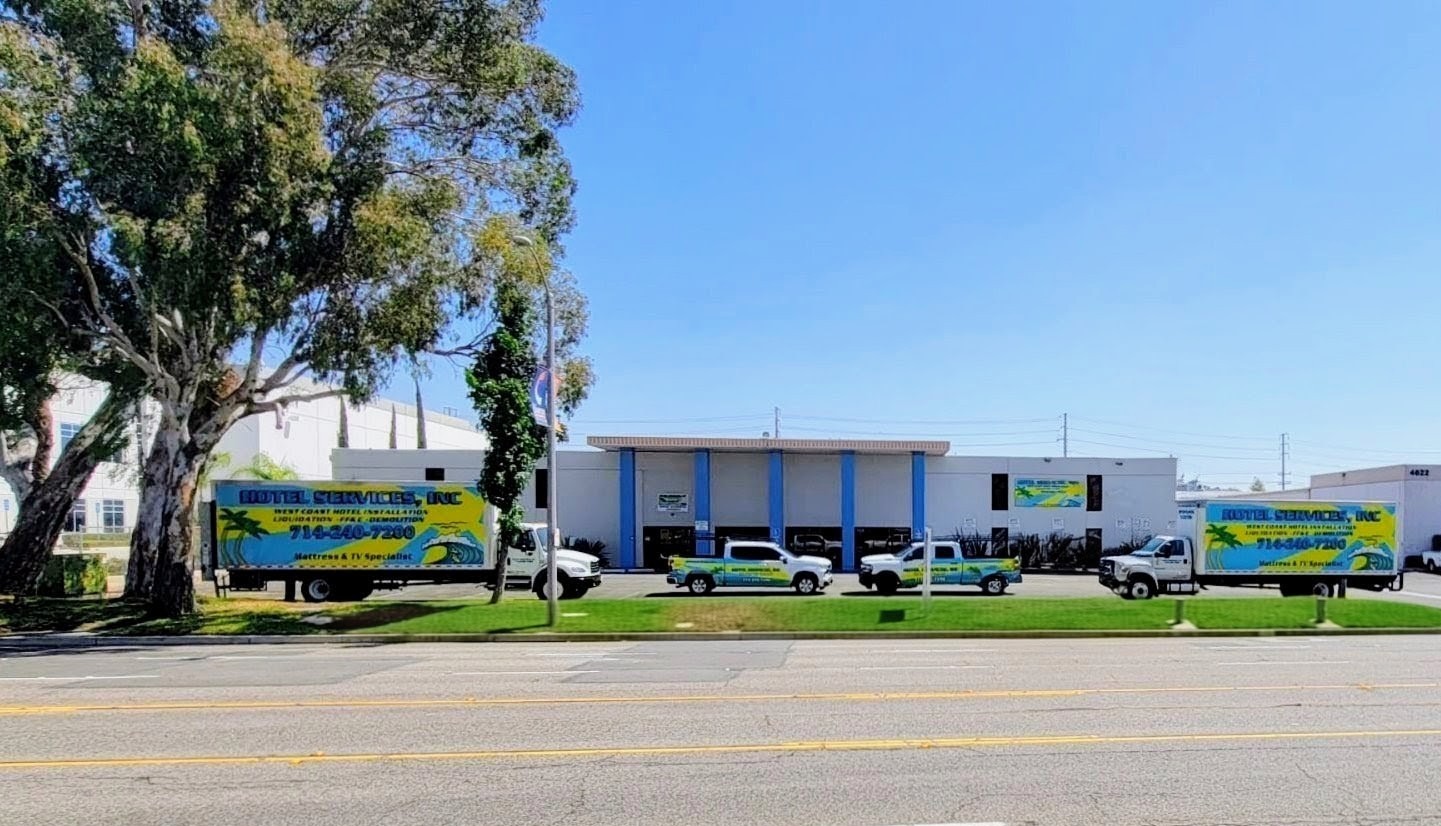
Hotel Services Inc. approaches liquidation as a complete process, including planning, careful removal, transportation, resale options, recycling, and site protection. Its crews serve hotels, motels, and resorts nationwide, with a focus on predictable scheduling, professional service, and minimal disruption to guests. Even when comparing providers, use the same level of detail in every proposal so bids can be evaluated fairly.
9 Hotel Liquidation Terms to Review Before Signing
1. Scope of work and inventory
The first term should list the exact items, quantities, locations, and services included. Ask whether the company is responsible for disconnecting, unbolting, disassembling, carrying, loading, transporting, and unloading furnishings. Confirm whether the scope covers guest rooms only or also corridors, offices, restaurants, meeting spaces, pools, and outdoor areas.
2. Project schedule and access requirements
Review the start date, completion deadline, daily work hours, loading procedures, elevator reservations, parking access, and room-release process. If the hotel remains open, the contract should address noise, protection of guest areas, housekeeping coordination, and procedures for working around occupied rooms. It should also explain what happens if rooms are unavailable or the property cannot provide access at the agreed time.
3. Ownership and title to removed items
Do not assume that a contractor owns an item as soon as it is placed in a hallway. The contract should state when ownership transfers, whether items are subject to liens, and who has authority to sell, donate, recycle, or discard them. If furnishings belong to a lender, franchise system, landlord, or another entity, that issue should be resolved before removal.
4. Hotel furniture liquidation pricing and payment
Pricing may be based on per-item rates, a lump sum, resale value, a revenue share, or a combination of charges and credits. A strong hotel furniture liquidation pricing schedule identifies labor, equipment, hauling, disposal, recycling, storage, fuel, taxes, and any after-hours premiums. It should also specify whether the quoted amount is fixed or subject to adjustment after an inspection.
5. Damage, protection, and insurance
Look for language covering damage to floors, walls, doors, elevators, fixtures, landscaping, and remaining hotel property. The provider should use reasonable protection and safe handling procedures. Ask for proof of general liability, workers’ compensation, automobile coverage, and any required licensing. The contract should explain how damage is reported, documented, and repaired.
6. Resale, recycling, and disposal standards
Many used hotel furnishings can be repurposed, but not everything is suitable for resale. The agreement should explain how usable items are handled and whether mattresses, electronics, appliances, metals, or damaged furniture are recycled. It should also identify who pays for landfill disposal and whether the hotel receives documentation of recycling or donation activity.
7. Changes, cancellations, and unforeseen conditions
Renovation projects change frequently. Review the process for adding rooms, removing items from the scope, postponing work, or canceling the project. Clarify charges for extra labor, inaccessible rooms, hazardous materials, abandoned property, excessive debris, or conditions that differ from the inventory. Requiring written approval for material changes helps prevent surprise invoices.
8. Completion standards and acceptance
The contract should define what “complete” means. Does completion require all listed items to be removed, rooms swept, debris hauled away, and loading areas cleaned? Establish a walkthrough or sign-off procedure, along with a reasonable period for reporting missing items, damage, or unfinished work. This is especially useful when the liquidation company is coordinating with an FF&E installer or demolition contractor.
9. Indemnification, dispute resolution, and termination
Read the legal provisions carefully. Indemnification language should be understandable and reasonably allocate responsibility rather than shifting every possible risk to the hotel. Confirm the governing law, venue, notice requirements, dispute process, and termination rights. If the project is time-sensitive, ask how the parties will handle a missed deadline or failure to perform.
Questions to Ask About a Hotel Furniture Removal Agreement
A well-written hotel furniture removal agreement should answer practical questions before crews arrive. Request a detailed proposal and compare it with the contract, because a polished estimate can still leave important obligations undefined. The following checklist can help during review:
- Is the inventory based on a current on-site assessment, photographs, or an older room list?
- Are mattresses, box springs, electronics, appliances, artwork, lamps, and outdoor items included?
- Is pricing calculated per item, per room, hourly, by truckload, or as a project total?
- Who pays for disposal, recycling, storage, freight, permits, elevator fees, and unexpected labor?
- How will reusable furnishings be valued, and when will credits or payments be issued?
- What floor, wall, door, elevator, and guest-area protection will the crew provide?
- Who coordinates room access, keys, security procedures, loading docks, and parking?
- What documentation will be supplied for recycling, donation, disposal, or final inventory?
- What happens if the property adds rooms, changes the schedule, or discovers damaged furnishings?
Also verify the company’s operational capabilities. Nationwide hotel projects may require different crews, transportation arrangements, and local coordination than a small local removal. Ask whether the provider has handled similar room counts and whether it can work alongside contractors without creating bottlenecks.
Hotel Services Inc. provides free quotes with detailed cost breakdowns and can perform on-site assessments for Southern California properties while offering remote solutions for out-of-state clients. Its work includes removal of furniture sets, beds, couches, chairs, lamps, televisions, appliances, air conditioners, artwork, patio furniture, sofa beds, mattresses, and box springs. Confirming the scope in writing allows the hotel to select only the services it needs.
How to Reduce Risk During Hotel FF&E Removal
Coordinate removal with renovation and installation teams
A hotel FF&E removal contract should fit into the broader construction schedule. Removal that happens too early can leave rooms empty and exposed; removal that happens too late can delay flooring, painting, installation, or inspection. Share the project calendar with all vendors and identify handoff points. If new case goods or mattresses are arriving, establish whether the same provider will move, install, inspect, or stage them.
For occupied properties, divide the work into manageable zones. A floor-by-floor or building-by-building plan makes it easier to maintain guest access and track completed rooms. Uniformed crews, clearly marked staging areas, protective materials, and daily status reports can further reduce disruption. The contract may also require the provider to secure removed electronics and prevent unauthorized access to stored furnishings.
Document condition before and after removal
Photographs and inventory sheets are valuable evidence. Before work begins, record the condition of floors, walls, doors, elevators, furniture, and high-value equipment. During the project, note exceptions such as missing items, pre-existing damage, blocked access, or furnishings that cannot be safely removed. At completion, conduct a walkthrough and retain signed records.
Environmental requirements deserve attention as well. Mattresses and box springs can occupy significant landfill space, while metal, wood, electronics, and other components may have recycling or reuse opportunities. Hotel Services Inc. works with MBC Mattress Recycling and Gateway Mattress Recycling and offers recycling options designed to give furnishings a second life. Hotels purchasing repurposed furnishings may also qualify for the company’s Green Certificate Program, which can support sustainability messaging.
Choosing the Right Liquidation Partner
The lowest quote is not always the lowest project cost. An unusually cheap proposal may exclude hauling, disposal, protection, insurance, access delays, or final cleanup. Instead, compare the full value of the service: scope clarity, scheduling reliability, crew professionalism, damage prevention, recycling practices, communication, and accountability.
Hotel Services Inc. was founded in 2006 as West Coast Liquidation and has grown from a liquidation-focused business into a full-service hospitality partner. In addition to liquidation, the company provides FF&E planning and installation, mattress installation and recycling, demolition, furniture sales, home staging, and Airbnb and VRBO furnishing solutions. Its crews work nationwide and can install furnishings to exact specifications, including securely mounting televisions, artwork, and headboards.
Ask for references or examples of comparable projects, particularly if your hotel has a large room count or a demanding operating schedule. Confirm that the company offers a written 100% guarantee on its work, communicates in the language your team prefers, and provides a clear escalation contact. Hotel Services Inc. offers service in English and Spanish and maintains a showroom and inventory in Anaheim, California.
Conclusion: Review Every Term Before You Sign
A hotel furniture liquidation contract should make the project easier to manage, not leave key decisions for the loading dock. Review the scope, schedule, ownership, hotel furniture liquidation pricing, insurance, recycling responsibilities, change procedures, completion standards, and legal remedies before signing. Then confirm that the agreement matches the inventory and the renovation timeline.
For a detailed estimate or consultation, contact Hotel Services Inc. at (714) 541-7600 or 888-238-5252. Bid estimates are available from John at (949) 310-2277 or (714) 240-7200. The company is located at 4640 E. La Palma Ave., Anaheim, California, and serves hospitality properties nationwide. A carefully reviewed contract and an experienced service partner can help protect your property, schedule, budget, and sustainability goals.