When hotel owners compare Idiom TVs vs non-Idiom TVs for hotels in Southern California, the decision can seem like a simple question of price. In reality, the better choice depends on the property’s cable or satellite system, premium-channel requirements, network infrastructure, guest expectations, and long-term maintenance plans. A television that looks excellent in a guest room may still create installation problems if it cannot receive encrypted commercial programming or integrate with the hotel’s existing headend system.
For hotels, motels, and resorts in Anaheim, Orange County, Los Angeles, San Diego, Riverside, and throughout Southern California, the key issue is usually not picture quality alone. It is compatibility. This guide explains what Pro:Idiom hospitality TVs are, how they differ from non-Idiom models, when each option makes sense, and how to evaluate used or refurbished inventory before purchasing. It also covers installation, mounting, recycling, and the practical questions to ask before a renovation or room refresh.
Idiom TVs vs Non-Idiom TVs for Hotels in Southern California: What Is the Difference?
In everyday conversation, “Idiom TV” generally refers to a hospitality television with Pro:Idiom built in. Pro:Idiom is a digital rights management and encryption technology used to protect high-definition television and video-on-demand signals in commercial environments. The technology is especially important when a hotel distributes premium programming without placing a separate set-top box in every guest room.
For example, a hotel may use a centralized cable, satellite, or video headend to distribute channels to hundreds of rooms. A compatible hospitality TV can decrypt authorized programming directly at the display. According to LG’s hospitality TV terminology guide, Pro:Idiom can eliminate the need for external set-top boxes when the content provider delivers Pro:Idiom-encrypted programming.
A non-Idiom TV does not necessarily mean a low-quality television. It may be a consumer smart TV, a commercial display without Pro:Idiom, or a hospitality model designed for IPTV, casting, or another distribution method. However, it may require additional equipment, such as a receiver, set-top box, media player, or streaming platform, depending on how channels reach the room.
Why the distinction matters
The difference becomes important when a property wants to offer premium sports, news, movie, or entertainment channels through a centralized system. Many commercial content providers require encryption to protect copyrighted programming. Spectrum Business explains that Pro:Idiom is used to secure high-definition and on-demand signals in hospitality television systems, and that many pay-TV services require this type of technology for hotel distribution.
That means the correct question is not simply, “Is this TV Pro:Idiom?” The more useful question is, “Will this TV work with the hotel’s complete entertainment system?”
Advantages of Pro:Idiom Hospitality TVs
Pro:Idiom TVs are designed for professional environments rather than ordinary residential use. They are commonly paired with hotel cable systems, satellite headends, IPTV platforms, and other commercial distribution systems. When properly matched to the property’s infrastructure, they can simplify room technology and reduce the number of individual devices staff must maintain.
1. Better compatibility with encrypted programming
The main advantage is secure delivery of premium content. A Pro:Idiom television can receive authorized encrypted signals directly, which may allow the hotel to avoid installing a separate receiver behind every screen. This can result in a cleaner wall installation, fewer cables, and fewer components that guests can unplug or accidentally damage.
That capability is particularly relevant for hotels offering sports and news programming. A hospitality industry requirements document from Hospitality Technology Next Generation notes that more than 89% of guests watched linear television during hotel stays in the referenced research period. The same document emphasizes that hotels need commercially licensed content rather than residential streaming subscriptions for guest-room distribution. Read the HTNG in-room entertainment system requirements for additional background on licensing and hotel television infrastructure.
2. Centralized management and hotel features
Many hospitality televisions include more than a screen and tuner. Depending on the model and platform, hotel staff may be able to configure channel maps, lock out certain settings, display welcome messages, provide a hotel-branded menu, show local weather, and present information about amenities or nearby attractions.
Some systems also support interactive program guides, casting, video-on-demand, or integration with other hotel technology. These features can help a property make the television part of the guest experience rather than treating it as a basic appliance.
3. Fewer room-level devices
With the right headend and programming provider, Pro:Idiom can reduce the need for receivers in individual rooms. Fewer devices may mean fewer points of failure, less visible equipment, and easier housekeeping. It can also make wall mounting more attractive because the installation appears cleaner and more finished.
However, Pro:Idiom is not a magic solution. The television, headend, signal format, content provider, and network design must all be compatible. A hotel should verify those details before buying a large quantity of used or new displays.
When Non-Idiom TVs May Be the Better Choice
Non-Idiom televisions can be appropriate for certain Southern California properties. The best choice depends on the entertainment model, not on the label alone. A smaller independent motel, extended-stay property, boutique hotel, or short-term rental operator may not need the same infrastructure as a full-service resort with hundreds of rooms and centralized premium programming.
IPTV, casting, and streaming-first properties
Some modern hotel systems use IPTV, which distributes live channels, on-demand programming, hotel information, and interactive services over an IP network. In that environment, the television may communicate with a platform through Ethernet or Wi-Fi rather than relying on a traditional coaxial distribution system.
A non-Idiom display may work well if it is certified for the chosen IPTV or casting platform. It may also be suitable when the property provides guest casting through a managed system that automatically disconnects a guest’s device at checkout. The important point is that compatibility with the platform matters more than whether the display includes Pro:Idiom.
Lower initial acquisition cost
Non-Idiom commercial or consumer displays can sometimes cost less, especially when purchased in bulk or sourced from a hotel renovation. For a property that only needs local broadcast channels, basic cable, or an external streaming device, the savings may be meaningful.
Nevertheless, the purchase price is only one part of the budget. A lower-cost television can become expensive if the hotel must add receivers, replace remotes frequently, troubleshoot inconsistent apps, or pay for specialized programming equipment in every room. Before choosing the less expensive option, calculate the total installed cost.
- Television or display purchase price
- Mounts, cables, adapters, and media players
- Headend or IPTV compatibility
- Programming and commercial content licensing
- Installation and configuration
- Remote controls, replacement parts, and technical support
- Future replacement and recycling costs
In other words, a non-Idiom television is not automatically the wrong choice. It is the wrong choice when it does not match the property’s content delivery system or creates avoidable operational costs.
What Southern California Hotels Should Check Before Buying
Southern California properties often face demanding operating conditions. Hotels may be completing renovations in occupied buildings, managing tight schedules, updating rooms in phases, or coordinating work across multiple locations. Television selection should therefore be part of the renovation plan, not an afterthought.
Confirm the existing system first
Before ordering, identify whether the property uses coaxial cable, IPTV, satellite, a centralized headend, individual receivers, or a hybrid configuration. Ask the programming provider which television models and encryption technologies are supported. If the hotel already uses Pro:Idiom, replacing the displays with non-compatible units could require costly system changes.
Also verify whether the television supports the required signal type, resolution, aspect ratio, control system, and channel mapping. A display may have a sharp 4K picture but still be unsuitable for the hotel’s distribution method.
Inspect used and refurbished inventory carefully
Used hotel TVs can provide strong value because hospitality properties frequently upgrade rooms before the displays are truly obsolete. However, buyers should inspect more than the front of the screen. Request the exact model number and confirm:
- Whether Pro:Idiom is built in, if required
- Whether the display is a hospitality model rather than a residential model
- Whether the remote control is included and functional
- Whether the screen has dead pixels, excessive wear, or visible damage
- Whether the ports, tuners, speakers, and power connections work properly
- Whether the television can be reset and configured for the new property
- Whether the mounting pattern fits the hotel’s existing brackets
Model numbers matter because two televisions that look nearly identical may have very different commercial features. LG, for instance, separates hospitality displays and Pro:Idiom-equipped models from ordinary consumer products. Always compare the exact model number with the manufacturer’s specification sheet rather than relying on a product photo or general description.
Plan professional installation
Installation quality affects safety, appearance, reliability, and guest satisfaction. Flat-screen TVs should be securely mounted to the correct wall structure, with cables routed neatly and equipment protected from tampering. In some rooms, the mounting location may need to account for headboards, mirrors, desks, accessibility requirements, or changes to furniture placement.
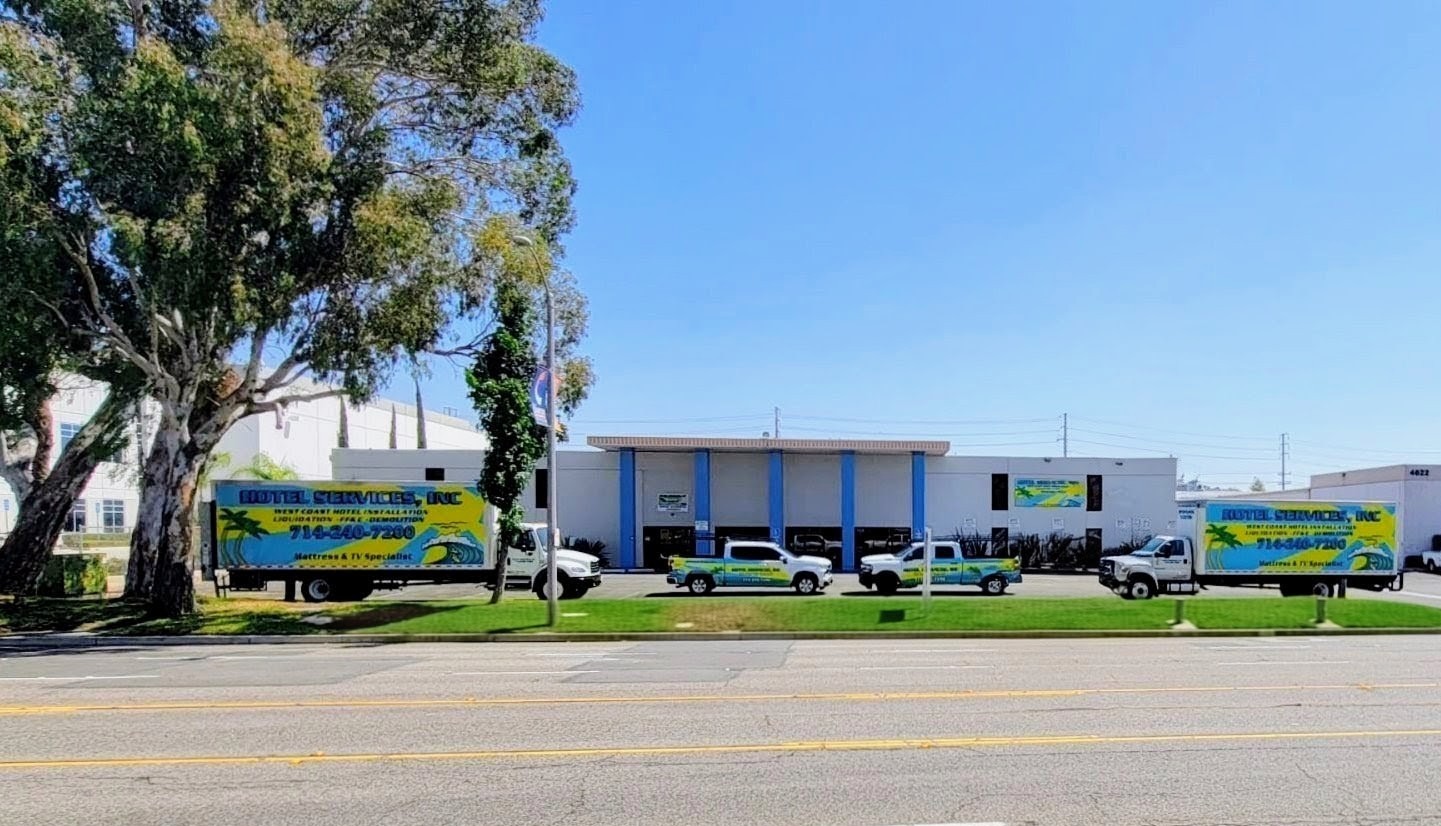
Hotel Services Inc. provides nationwide furniture and equipment installation, including secure mounting of flat-screen TVs, wall art, and headboards. Professional crews can coordinate television placement with case goods movement, room outfitting, renovation schedules, and final quality inspections. That coordination is especially useful when a hotel is replacing televisions while also updating beds, desks, seating, lighting, or artwork.
Should Your Hotel Choose Idiom or Non-Idiom TVs?
For many hotels using centralized cable or satellite distribution, Pro:Idiom hospitality TVs remain the practical choice. They can support encrypted premium channels without requiring a separate box in every room, provided the programming system is compatible. They are also a strong fit for properties that want commercial controls, standardized configurations, and a consistent guest-room experience.
Non-Idiom TVs may be the better fit when the property has a certified IPTV or casting platform, uses external receivers by design, provides only basic programming, or is furnishing a smaller number of rooms with a tightly controlled technology plan. They can also make sense for Airbnb, VRBO, extended-stay, and boutique applications where guests primarily use their own streaming accounts through a managed casting system.
Use this decision checklist:
- Choose Pro:Idiom when your headend or content provider requires encrypted hospitality displays.
- Consider non-Idiom when your IPTV or casting platform specifically supports the selected model.
- Do not assume that a smart TV is automatically suitable for hotel use.
- Compare total cost, including receivers, installation, programming, maintenance, and replacement.
- Buy by exact model number, not by screen size or appearance alone.
Hotel Services Inc. can help Southern California properties evaluate and source hotel televisions as part of a broader furnishing, liquidation, or renovation project. The company handles hotel furniture liquidation, FF&E installation, room outfitting, mattress services, demolition, recycling, and professional equipment installation. Its inventory includes televisions and other furnishings sourced from four- and five-star hotels, often at a lower cost than new commercial equipment.
Conclusion: The Right TV Is the One That Fits the Whole System
So, does the difference between Idiom and non-Idiom TVs really matter for hotels in Southern California? Yes—but only when it affects compatibility, licensing, installation, guest features, or long-term operating costs.
Pro:Idiom is valuable for hotels that distribute encrypted commercial programming through a centralized system. Non-Idiom displays can be perfectly suitable for properties using compatible IPTV, casting, or external-device solutions. Neither option should be selected solely because it is cheaper or newer.
Before purchasing, confirm the property’s signal infrastructure, programming provider, required features, mounting needs, and maintenance plan. For help sourcing hotel TVs, coordinating installation, or combining a television upgrade with furniture liquidation and FF&E services, contact Hotel Services Inc. at (714) 541-7600 or 888-238-5252. The Anaheim-based team serves hotels, motels, and resorts nationwide, with English- and Spanish-speaking support available.