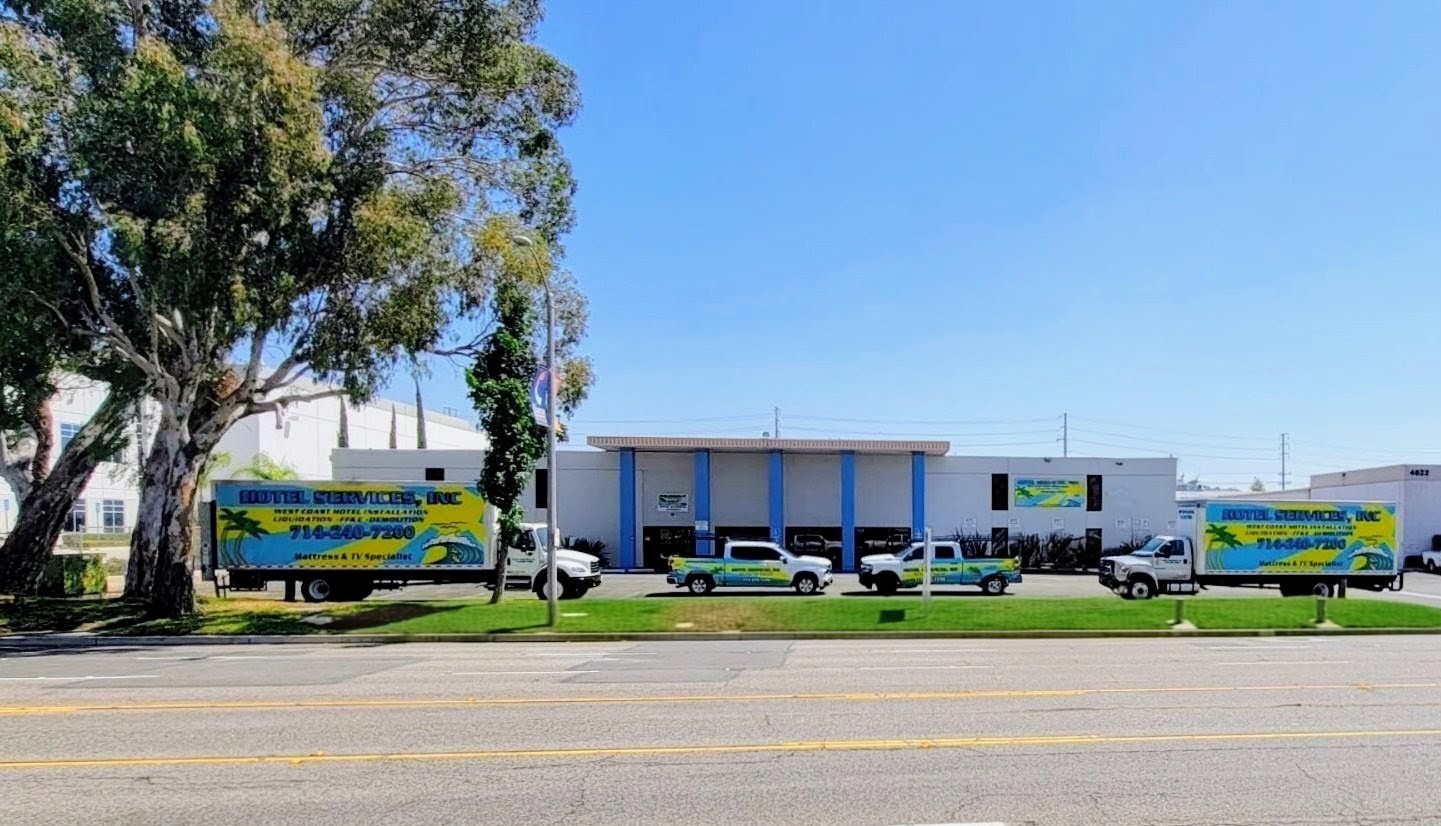
Hotel furniture moving costs can quickly affect a renovation budget when beds, case goods, mattresses, appliances, and décor must be relocated across several properties. A single hotel move is already complex; coordinating multiple destinations adds transportation, labor, storage, scheduling, and installation considerations. Without a detailed plan, unexpected accessorial charges and project delays can reduce the value of an otherwise successful renovation.
This guide explains how to estimate hotel furniture transport expenses, organize a multi-property furniture relocation, and build a practical FF&E moving budget. You will learn which cost factors matter most, how consolidation services can reduce waste, and why working with an experienced hospitality moving partner can protect guest areas, building finishes, and project timelines.
Understanding Hotel Furniture Moving Costs
Hotel furniture moving costs rarely depend on distance alone. The total price reflects the amount and type of furniture, the number of rooms, labor requirements, loading conditions, delivery locations, and whether items need to be installed or removed. A property moving 100 bedroom sets within the same city may have a different budget from a 25-room shipment traveling across the country.
Primary cost factors
- Furniture volume: Beds, mattresses, nightstands, desks, seating, lamps, televisions, and artwork all contribute to the shipment size.
- Item weight and dimensions: Solid-wood case goods, sofa beds, refrigerators, and commercial appliances require more handling than lightweight décor.
- Labor: Crews may need to disassemble, wrap, carry, load, unload, reassemble, and position each item.
- Travel distance: Mileage, fuel, tolls, permits, and driver time affect long-distance hotel furniture transport expenses.
- Building access: Elevators, loading docks, stairs, narrow corridors, limited parking, and restricted delivery hours can increase labor time.
- Timing: Accelerated schedules, overnight work, weekend deliveries, and phased room turnovers may require additional coordination.
- Protection and handling: Moving blankets, corner protection, shrink wrap, specialty crating, and floor protection help prevent damage.
Some providers quote hourly labor, while others use per-item, per-room, per-load, or project-based pricing. A per-item approach can make a large hotel liquidation or relocation easier to forecast because the scope is tied to the actual inventory rather than an open-ended number of labor hours. Ask for a written estimate that separates removal, transportation, storage, installation, disposal, and any possible accessorial charges.
Why an inventory list matters
A reliable estimate begins with a complete inventory. Include quantities, dimensions when available, condition, destination, and whether each item will be reused, sold, recycled, stored, or discarded. Photographs and floor plans are especially useful when a mover cannot immediately visit the property.
For Southern California properties, Hotel Services Inc. can arrange on-site assessments. For out-of-state projects, remote planning and inventory information can help develop a practical scope. The more precise the inventory, the less likely the final invoice will differ from the original estimate.
How to Build an FF&E Moving Budget for Multiple Properties
A successful FF&E moving budget should account for the complete project lifecycle, not merely the truck or crew charge. Furniture, fixtures, and equipment may travel from a closing hotel to a renovation site, a warehouse, several sister properties, or a resale destination. Mapping those movements before work begins helps owners avoid unnecessary handling and duplicate transportation.
Separate fixed, variable, and contingency costs
Start by dividing the budget into three categories. Fixed costs may include project management, scheduled equipment, contracted transportation, or a defined installation package. Variable costs can include additional labor, mileage, storage duration, packing materials, and changes in room quantities. Finally, include a contingency reserve for issues that cannot be confirmed until the move begins.
A useful planning formula is:
Total project budget = removal and preparation + transportation + receiving and installation + storage or disposal + project management + contingency.
The contingency amount should reflect the project’s uncertainty. A straightforward same-property transfer may need less reserve than a long-distance relocation involving several hotels, tight delivery windows, and older furniture that requires extra disassembly or repair. Confirm the recommended reserve with the moving provider rather than applying one percentage to every project.
Budget by property and phase
For a multi-property project, create a separate cost line for every origin and destination. Record the number of rooms, furniture categories, pickup date, delivery date, crew requirements, and estimated loads. Then divide the work into phases such as:
- Inventory and site assessment
- Room preparation and furniture removal
- Sorting, labeling, and consolidation
- Transportation or temporary storage
- Delivery and installation
- Quality inspection and closeout
This structure makes it easier to compare the cost of moving an item to another property with the cost of selling or recycling it. It also identifies which locations have the highest handling expense. For example, a low-value item may not justify a separate shipment if it occupies substantial truck space or requires special handling.
Include financial allowances for damaged or missing pieces, replacement hardware, touch-ups, mattress disposal, and last-minute room changes. A clear budget is not designed to eliminate every surprise; it is designed to show where surprises could occur and who is responsible for approving them.
Reducing Multi-Property Furniture Relocation Expenses
A multi-property furniture relocation becomes more efficient when the project is treated as a coordinated network instead of a collection of individual moves. The objective is to minimize empty truck space, repeated handling, unnecessary storage, and rushed deliveries while keeping each hotel operating safely.
Use consolidation and route planning
Furniture consolidation services can combine items from multiple hotels into organized shipments or staging locations. Instead of sending partially filled trucks to several destinations, a provider may group compatible loads, plan a more efficient route, and deliver furniture according to each property’s renovation schedule.
Consolidation is most useful when:
- Several hotels are located within the same region or along a practical route.
- Furniture from one property is being distributed to multiple sister properties.
- A renovation schedule requires phased deliveries rather than one large shipment.
- Warehouse space is available for short-term sorting and staging.
- Inventory includes reusable items that must be matched to specific rooms.
However, consolidation is not automatically cheaper. Additional sorting, cross-docking, or storage can add handling charges. Compare the complete consolidated option with direct shipment pricing, including the value of faster delivery and reduced risk of damage.
Coordinate removal, installation, and hotel operations
Hotel furniture removal should be coordinated with housekeeping, engineering, contractors, front-desk staff, and renovation managers. A room-by-room sequence helps crews work without blocking guest corridors or interfering with check-in activity. Professional uniformed crews can also help create a consistent experience for guests and hotel employees.
Before delivery, confirm loading dock reservations, elevator access, parking, security procedures, room readiness, and installation specifications. Clearly label every load by property, floor, room type, and destination. When furniture is installed, verify bed placement, headboard mounting, television security, wall-art positioning, and room completeness before the room returns to service.
Hotel Services Inc. provides nationwide installation and can coordinate case goods movement, complete room outfitting, quality inspections, and contractor communication. Its crews are organized to minimize guest disruption while protecting floors, walls, doors, and other finished surfaces.
Moving, Selling, Recycling, or Storing Hotel Furniture
Moving every item is not always the most economical decision. During a renovation, owners should evaluate the useful life, resale potential, transportation requirements, and environmental impact of each furniture category. This is particularly important for mattresses, box springs, damaged case goods, bulky seating, and outdated electronics.
Evaluate total value, not just moving price
Compare the estimated relocation cost with the item’s replacement cost and expected remaining service life. Commercial-grade furniture sourced from a quality hotel may be worth moving to another property, while worn or incomplete pieces may cost more to handle than they are worth. Group inventory into four practical categories:
- Reuse: Items in good condition that fit the receiving property’s design and specifications.
- Sell or liquidate: Surplus furniture with resale value but no role in the renovation plan.
- Recycle: Mattresses, box springs, metal components, wood, and other materials that should be diverted from landfills when possible.
- Dispose: Items that are unsafe, contaminated, severely damaged, or otherwise unsuitable for reuse.
Hotel Services Inc. offers hotel furniture liquidation with a systematic removal process, detailed quotes, and protection for the property during pickup. Its inventory can include furniture sets, beds, couches, lamps, televisions, appliances, artwork, patio furniture, sofa beds, mattresses, and box springs. Liquidating usable items may create a recovery value that offsets part of the relocation or renovation expense.
Plan mattress handling separately
Mattresses and box springs often require separate planning because of their size, hygiene requirements, and recycling options. A bulk mattress removal program can prevent discarded units from occupying valuable storage or construction areas. Hotel Services Inc. works with mattress recycling partners, including MBC Mattress Recycling and Gateway Mattress Recycling, to help give suitable materials a second life and reduce landfill waste.
When reusable furnishings are purchased through the company, participating hotels may also receive a Green Certificate recognizing their environmentally responsible purchasing decision. Documenting reuse and recycling can support sustainability reporting and provide a useful message for environmentally conscious guests.
Choosing a Hotel Furniture Moving Partner
The right provider should do more than supply labor and trucks. Hospitality relocations require detailed coordination, respect for occupied properties, dependable scheduling, and accountability if conditions change. Request references or examples of comparable hotel, motel, resort, or multi-site projects before approving a scope of work.
Ask prospective providers:
- Is pricing based on items, rooms, loads, hours, or a complete project?
- Does the estimate include disassembly, wrapping, loading, unloading, and reassembly?
- Can the company coordinate removal, transportation, liquidation, recycling, and installation?
- How are furniture pieces labeled and tracked between properties?
- What protection is used for floors, walls, doors, elevators, and furniture?
- How are schedule changes, damage claims, storage, and additional work handled?
- Can the provider support projects outside its home market?
Hotel Services Inc., based in Anaheim, California, has served the hospitality industry since 2006 and supports hotels nationwide with liquidation, FF&E services, mattress handling, recycling, demolition, and installation. The company emphasizes fair rates, on-time delivery, professional crews, and a 100% guarantee on its work. It can also provide free consultations and detailed bid estimates.
Conclusion: Plan the Move Before the Renovation Starts
Accurate hotel furniture moving costs come from careful inventory, realistic labor assumptions, efficient routing, and a decision about what should be moved, sold, recycled, or discarded. For multiple properties, a property-by-property budget combined with coordinated scheduling can reduce duplicate handling and protect renovation timelines.
Hotel Services Inc. can help evaluate inventory, prepare a detailed scope, coordinate furniture liquidation or relocation, and complete professional installation across the country. To discuss a project, call (714) 541-7600 or 888-238-5252. For bid estimates, contact John at (949) 310-2277 or (714) 240-7200. You can also visit the Anaheim showroom, request a consultation through hotelserviceinc.com, or ask about available inventory and financing options.