Hotel FF&E receiving is one of the most important control points in a hotel renovation. A delivery that is accepted without a careful inspection can create missing-room delays, installation problems, damaged finishes, and expensive claims that are difficult to resolve later. Whether you are receiving guestroom case goods, mattresses, lighting, artwork, appliances, or public-area furniture, your team needs a repeatable process.
This hotel furniture delivery inspection checklist explains how to prepare for deliveries, verify quantities and specifications, document condition, manage exceptions, and release items for installation. It is designed for hotel owners, general contractors, purchasing teams, project managers, and renovation coordinators. With organized FF&E delivery management, properties can protect their investment, keep installation crews productive, and reduce disruption for guests and staff.
Hotel FF&E Receiving: Prepare Before the Truck Arrives
Successful receiving starts well before the delivery vehicle reaches the property. Renovation teams should establish who is responsible for receiving, where items will be unloaded, how products will be counted, and where approved items will be stored. Without these decisions, even a correctly shipped order can become difficult to locate or verify.
Confirm the delivery plan
Review the purchase order, packing list, approved specifications, and current renovation schedule together. Confirm the expected delivery date, carrier, number of pallets or cartons, and the rooms or areas assigned to each product. If the shipment includes furniture for multiple floors, ask the supplier to separate and label it by floor, room type, or installation phase whenever possible.
Before arrival, verify the following operational details:
- The delivery window and site contact are confirmed with the carrier.
- The loading dock, service entrance, freight elevator, and access routes are available.
- Receiving staff know where products will be staged and stored.
- There is adequate space to inspect items without exposing them to weather or guest traffic.
- Protective materials are available for floors, walls, doors, elevators, and finished surfaces.
- The project team has the latest room matrix, purchase orders, and approved finish samples.
- Installation crews know which products are ready, quarantined, or awaiting clarification.
Assign roles and establish a staging system
At minimum, designate one person to lead receiving and another to record counts and condition. For larger hotel renovation furniture receiving projects, a receiving lead, quality inspector, warehouse or staging coordinator, and project manager may each have separate responsibilities. The person signing the bill of lading should understand that a signature confirms receipt of the shipment, not necessarily that every item is undamaged or correct.
Create clearly marked areas for accepted, damaged, short-shipped, and unverified products. Never mix rejected cartons with approved inventory. Photograph labels before moving items, and use a consistent naming system for photos and inspection forms. For example, a file name can include the date, building, floor, room number, product code, and issue type.
Hotel Furniture Delivery Inspection Checklist
When the truck arrives, inspect the shipment methodically. Rushing through receiving because an installation crew is waiting can cause defects to be overlooked. The goal is to compare what arrived with what was ordered, then confirm that the products are suitable for installation.
Check the shipment before unloading
Look at the truck, trailer, pallets, and outer packaging before anything is removed. Note crushed corners, punctures, water exposure, broken shrink wrap, leaning pallets, or evidence that cartons shifted during transit. Take wide photographs showing the condition of the load and close photographs showing specific damage.
Compare the carrier paperwork with the expected shipment. Record the number of pallets, cartons, bundles, and loose items. If the count does not match, note the discrepancy on the delivery receipt before signing. Use clear language such as “two cartons short,” “four pallets received with visible damage,” or “subject to inspection.” Avoid signing a clean receipt when the shipment has obvious problems.
Inspect each product category
Open and inspect items according to the project’s risk and installation sequence. Some products should be checked immediately because damage may affect safety or room completion. A practical inspection should include:
- Case goods: Confirm dimensions, finish, edge banding, doors, drawers, hardware, leveling devices, and predrilled holes. Look for chipped laminate, scratches, cracked panels, and loose components.
- Beds and headboards: Verify size, upholstery, mounting hardware, structural integrity, and alignment with approved shop drawings. Check wall-mounted components for the required brackets and fasteners.
- Mattresses and box springs: Confirm size, model, quantity, labels, packaging integrity, and cleanliness. Keep mattresses protected from moisture, dust, and construction debris.
- Seating: Inspect frames, legs, casters, upholstery, stitching, color, and stability. Compare fabric or leather against the approved sample.
- Lighting and electrical equipment: Confirm model numbers, shades, cords, switches, mounting pieces, and compliance labels. Do not install items with exposed wiring or broken components.
- Artwork, mirrors, and accessories: Check glass, frames, corners, hanging hardware, dimensions, and orientation. Keep fragile pieces separated from heavy furniture.
- Appliances and electronics: Verify make, model, voltage, accessories, remotes, manuals, and visible condition. Test equipment when the project plan and site conditions permit.
Receiving personnel should compare product labels with the approved item schedule, not rely only on carton descriptions. Similar-looking finishes, reversed handing, incorrect dimensions, or substituted models can create major installation issues. If a product cannot be fully inspected because it is sealed, document that fact and establish when it will be opened.
Document Damage, Shortages, and Incorrect Items
Strong documentation protects the hotel, supplier, carrier, and installation team. Every exception should be recorded while the shipment is still under the control of the receiving process. Verbal reports are easily forgotten, especially when several trades are working on a compressed renovation schedule.
Use a consistent exception report
For each issue, record the delivery date, purchase order, carrier, carton or pallet number, product description, room or area assignment, and exact condition. Include photographs from multiple angles. If possible, retain the original packaging until the supplier or carrier confirms that it is no longer needed for a claim.
A useful report should answer five questions:
- What was expected?
- What was received?
- What condition was it in?
- Where is the affected item now?
- What action and deadline are required?
For example, “Room 418 nightstand, item CG-12, received with a 3-inch chip on the front-right corner; carton punctured in same location; moved to quarantine area; replacement requested by May 12” is far more useful than “nightstand damaged.”
Separate damage from installation-related issues
Not every problem is a shipping claim. Damage can occur during manufacturing, transit, unloading, storage, or installation. Photographing the item before it is moved and documenting who handled it helps establish responsibility. Store products on appropriate supports and keep them away from wet areas, open windows, active demolition, and construction dust.
Do not allow installers to modify questionable items without written approval. Cutting, drilling, refinishing, or assembling a damaged product may make it harder to obtain a replacement or credit. Instead, tag the item and notify the project manager, supplier, purchasing contact, and carrier as applicable.
For shortages or incorrect items, check whether the missing component is packed separately before declaring a complete shortage. Hardware bags, legs, mounting brackets, shelves, and remote controls are often packaged inside larger cartons. Once a true shortage is confirmed, update the room matrix so installation teams do not repeatedly search for the same item.
Move Accepted FF&E Into Installation Without Losing Control
Receiving does not end when the paperwork is signed. The next challenge is moving accepted products into the correct rooms while preserving condition and maintaining an accurate inventory. This is where disciplined FF&E delivery management saves time.
Use room-by-room release procedures
Release items for installation only after they have passed inspection and are matched to the correct room or area. A room-by-room process makes it easier to identify missing pieces and prevents furniture intended for one room type from being installed elsewhere. If the property is occupied, coordinate deliveries and staging with hotel operations to minimize noise, elevator conflicts, and guest disruption.
Before installation, confirm that:
- The room is clear of demolition debris and ready for furnishing.
- Walls, floors, doorways, and elevators are protected.
- Products are assigned to the correct room and installation sequence.
- Required hardware, templates, and instructions are present.
- Wall blocking, electrical outlets, plumbing, and other site conditions match the approved plans.
- Installed items can be inspected for alignment, stability, finish, and damage.
Use a sign-off form or digital tracking system to show when each room was delivered, installed, inspected, and accepted. Record punch-list items separately from shipping damage. This distinction helps the project team determine whether an issue requires replacement, repair, adjustment, or a construction change.
Coordinate receiving with professional installers
Experienced hotel installation crews can identify practical problems that are easy to miss during unloading, including missing mounting hardware, inconsistent dimensions, incorrect room assignments, and conflicts between furniture and building conditions. They can also protect floors, walls, doors, and finished surfaces while moving products through the property.
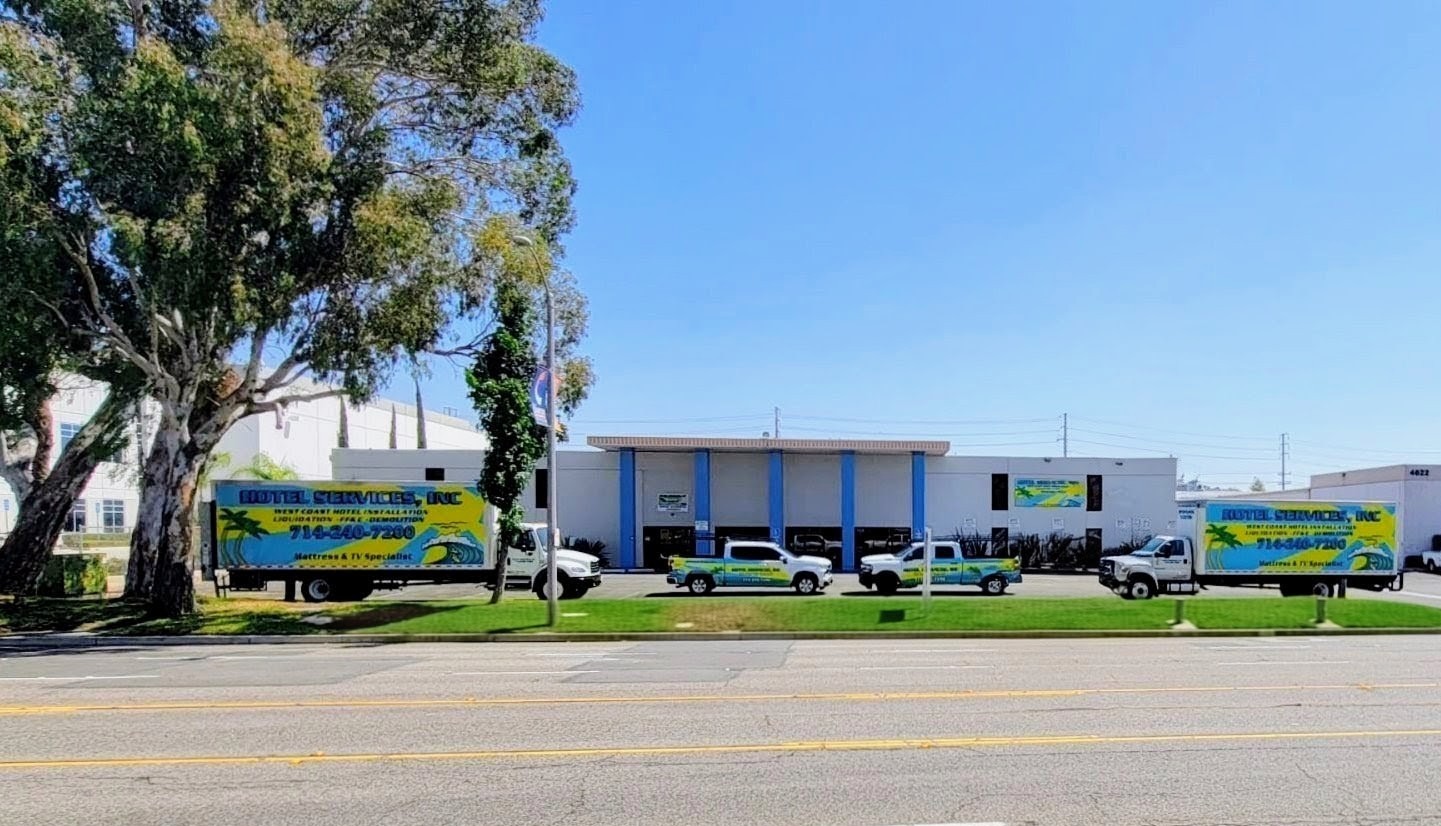
Hotel Services Inc. provides FF&E planning, contractor coordination, case goods movement, complete room outfitting, quality inspections, timeline management, and nationwide furniture installation. Its professional uniformed crews are organized to work efficiently while minimizing disruption to guests and hotel operations. For projects involving mattresses, beds, headboards, or full guestroom packages, coordinating receiving and installation with one experienced partner can reduce handoffs and improve accountability.
Improve Hotel Renovation Furniture Receiving on Future Projects
Each renovation should produce lessons that make the next delivery more predictable. After a shipment is closed, review the receiving log, damage rate, shortage rate, response times, and installation delays. Look for patterns such as inadequate packaging, unclear labeling, late substitutions, poor storage conditions, or deliveries arriving before rooms are ready.
Standardize the process with a written hotel furniture delivery inspection checklist. Include the same core fields for every project, then add category-specific checks for mattresses, case goods, lighting, electronics, and public-area furnishings. Train all receiving staff on how to photograph damage, annotate carrier documents, protect products, and escalate exceptions.
It is also helpful to involve the FF&E partner early. Before products ship, confirm approved samples, quantities, dimensions, room assignments, delivery sequencing, packaging expectations, and the process for replacements. Early coordination can prevent a truck from arriving at a property that lacks storage space, elevator access, labor, or installation readiness.
Hotel Services Inc. supports hotels, motels, and resorts nationwide with coast-to-coast installation and related furnishing services. The company also handles furniture liquidation, mattress removal and installation, demolition support, recycling, and sales of quality used commercial furniture sourced from four- and five-star hotels. When usable furnishings are removed during a renovation, recycling and repurposing options can help reduce landfill waste and support a more responsible project.
Conclusion: Build a Reliable FF&E Receiving Process
A careful receiving process protects the renovation budget and keeps rooms moving toward completion. Confirm the delivery plan, inspect packaging and products, document every exception, quarantine questionable items, and release approved FF&E by room or installation phase. Just as importantly, coordinate receiving with the installation team so damage, shortages, and site conflicts are resolved before they affect opening dates.
Hotel Services Inc. offers full-service FF&E support, professional installation, mattress services, furniture liquidation, recycling, and hotel furnishing solutions. The company serves hospitality properties nationwide and provides fair rates, organized crews, and a 100% guarantee on its work. To discuss a renovation, request a bid estimate from John at (949) 310-2277 or (714) 240-7200, or call (714) 541-7600 or 888-238-5252. You can also visit the Anaheim showroom at 4640 E. La Palma Ave., Anaheim, California, or explore services and inventory at hotelserviceinc.com.