Hotel renovations in Southern California rarely fail because of one large mistake. More often, delays and budget overruns come from disconnected details: furniture arrives before rooms are ready, old mattresses remain in hallways, installation crews wait for access, or discarded furnishings are sent away without a clear recovery plan. That is why integrated FF&E services are becoming increasingly valuable for hotel owners, general contractors, and asset managers managing renovation work in SoCal.
The need is especially relevant as hotel operators balance rising costs, staffing challenges, and competitive pressure to keep rooms and public areas current. In a September 2025 survey, the American Hotel & Lodging Association reported that 32% of respondents had delayed development or renovation projects, while 24% had scaled plans back. This article explains how a coordinated furnishing partner can simplify hotel renovation logistics, reduce guest disruption, support sustainability goals, and help properties move from demolition to reopening with greater control.
Why Integrated FF&E Services Matter in Southern California Hotel Renovations
Integrated FF&E services bring furniture, fixtures, equipment, removal, delivery, installation, inspection, and timeline coordination into one organized process. Instead of assigning each task to a different vendor, hotel owners can work with a partner that understands how the pieces affect one another.
For example, a room cannot be considered renovation-ready simply because the construction work is complete. The old case goods may still need to be removed, mattresses may require separate recycling or disposal, new beds and seating may need to be staged, and televisions, mirrors, artwork, headboards, and other items may need secure installation. When those activities are managed separately, small scheduling gaps can delay room turnover.
One plan for removal, sourcing, and installation
A coordinated FF&E plan typically begins with a property assessment and a detailed scope of work. The scope can identify what will be liquidated, what will be recycled, what will be retained, and what must be sourced or installed. It can also define room-by-room sequencing, loading access, elevator use, storage requirements, inspection points, and final cleanup.
This approach is valuable for hotels operating in dense or high-demand markets such as Anaheim, Orange County, Los Angeles, San Diego, and the Inland Empire. A hotel may not be able to close an entire property for months. Instead, rooms, floors, wings, or public areas may be renovated in phases while the rest of the hotel continues serving guests.
Why timing is a business issue
Every room taken out of service represents potential revenue that must be balanced against the cost of completing the renovation correctly. A furnishing partner that can coordinate removal and installation around the contractor’s schedule helps reduce idle time between construction completion and room release.
Current market conditions make that efficiency even more important. The 2026 AHLA State of the Industry report identifies high capital costs, financing challenges, and regulatory hurdles as factors keeping hotel construction below pre-pandemic levels. For owners choosing to renovate existing properties rather than pursue new development, disciplined execution can make the difference between a controlled refresh and a prolonged disruption.
How Hotel Renovation Logistics Become More Manageable
Hotel renovation logistics involve much more than moving furniture from one location to another. They require careful coordination between ownership, management, design teams, contractors, housekeeping, engineering, front-office staff, and outside vendors. An integrated hotel furnishing solutions provider can serve as the operational link between those groups.
A practical renovation workflow
- Assess the property: Review guest rooms, suites, corridors, meeting spaces, restaurants, patios, and back-of-house areas to determine the scope.
- Build a removal plan: Identify furniture, mattresses, appliances, artwork, lighting, and other items for liquidation, donation, recycling, resale, or disposal.
- Coordinate with construction: Align removal and installation dates with demolition, flooring, painting, electrical, plumbing, and inspection milestones.
- Stage incoming FF&E: Organize beds, case goods, seating, lamps, televisions, artwork, and accessories so crews can work efficiently by room or phase.
- Install and inspect: Place items according to the approved layout, mount eligible equipment securely, and complete quality-control checks before turnover.
- Release the space: Remove packaging and debris, confirm punch-list items, and prepare the area for housekeeping and hotel operations.
This workflow helps prevent common problems such as mixed room packages, missing hardware, damaged walls, misplaced inventory, and incomplete installations. It also creates clearer accountability. When one company manages several connected tasks, the hotel has a more direct point of contact when conditions change.
Minimizing guest disruption
Professional crews should be prepared to work around hotel operations. That means protecting floors, walls, doors, elevators, and common areas; using designated routes; maintaining orderly staging areas; and following property access rules. Uniformed crews and clear communication can also help guests and employees distinguish renovation activity from normal hotel operations.
For occupied properties, the best installation schedule may involve early-morning room access, floor-by-floor sequencing, or one-day mattress and bed-set installation. The correct method depends on occupancy, staffing, elevator capacity, and the renovation scope. The important point is to plan these details before trucks arrive.
Why Hotel Furniture Liquidation and Installation Belong Together
Hotel furniture liquidation installation is most effective when removal and replacement are treated as two parts of the same project. A hotel may have dozens or hundreds of rooms containing beds, nightstands, desks, lounge chairs, sofas, lamps, televisions, artwork, appliances, and patio furnishings. Removing those items quickly is only useful if the property can then move cleanly into the next phase.
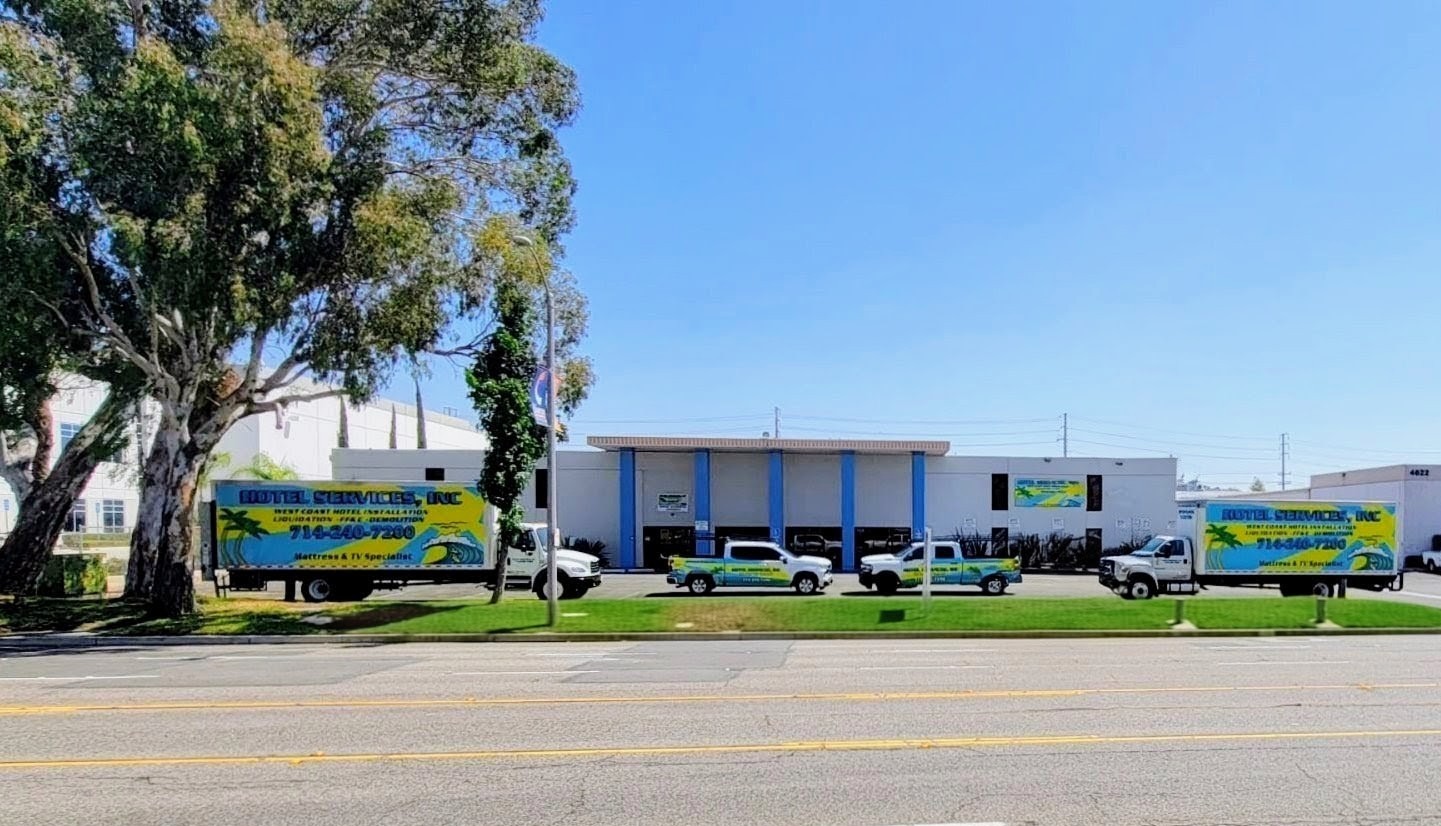
Hotel Services Inc. approaches liquidation as a systematic process rather than a simple haul-away service. Its crews can remove unwanted furnishings from guest rooms and common areas, protect the property during removal, and work within a defined timeline and budget. Quotes can be prepared with detailed cost breakdowns, and pricing can be structured per item rather than by the hour.
Recovering value from retired furnishings
Not every item removed during a renovation belongs in a landfill. Commercial-grade furniture sourced from four- and five-star hotels may still be useful to independent hotels, motels, short-term rental operators, home stagers, and other buyers. Reselling usable furniture can reduce disposal volume while helping buyers obtain quality pieces at a lower cost than new commercial furnishings.
Hotel Services Inc. maintains inventory that can include furniture sets, beds, mattresses, box springs, appliances, televisions, artwork, patio furniture, sofa beds, lamps, couches, and other hospitality furnishings. This creates a potential loop: one property’s renovation inventory may become another property’s cost-conscious furnishing solution.
Coordinating replacement FF&E
Replacement work may include moving and positioning case goods, outfitting rooms, installing mattresses and box springs, mounting televisions and artwork, securing headboards, and completing quality inspections. The installation team must understand the approved room layout and follow the specifications provided by the hotel, designer, brand, or contractor.
Hotel Services Inc. also brings experience from large-scale hospitality work, including a project that replaced nearly 1,000 beds at Hotel Del Coronado in 2010. More recently, the landmark resort announced completion of a more than $550 million, multi-year restoration in June 2025, demonstrating how complex and phased hotel renewal can become when guest rooms, historic areas, restaurants, event spaces, and public zones are involved. The Hotel Del Coronado restoration announcement provides an example of the scale that property-wide hospitality improvements can reach.
Sustainability Benefits for SoCal Hotel Owners
Sustainability is no longer limited to energy-efficient lighting or water-saving fixtures. Hotel renovations also create an opportunity to manage furniture, mattresses, packaging, and demolition materials more responsibly. The U.S. Environmental Protection Agency describes sustainable materials management as a life-cycle approach that emphasizes productive use, reuse, maintenance, and responsible waste management.
For hotel owners, that principle can be applied through practical steps: reselling usable furniture, separating recyclable materials, using mattress recycling programs, and documenting diversion activities. These actions can support internal environmental goals and provide useful information for brand reporting, ownership presentations, or guest-facing sustainability initiatives.
Mattress recycling during renovation
Mattresses and box springs require special attention because renovation projects can generate large quantities at once. California’s mattress stewardship program is overseen by CalRecycle and is designed to ensure that used mattresses, box springs, and futons are reused, recycled, or properly disposed of. The CalRecycle mattress management guidance explains the state’s program and recycling resources.
Hotel Services Inc. works with MBC Mattress Recycling and Gateway Mattress Recycling to provide recycling options for mattresses and furniture. Depending on condition and project requirements, items may be directed toward recycling, resale, or appropriate disposal. Coordinating this service with room clearing helps prevent mattresses from accumulating in loading areas or being mixed with general renovation debris.
Supporting a circular furnishing model
Repurposed furniture can offer both financial and environmental value. Hotels purchasing eligible repurposed furnishings through Hotel Services Inc. may also receive an official Green Certificate recognizing the property’s environmentally sound purchasing decision. While certification does not replace a broader sustainability program, it can give an independent hotel or motel a tangible way to communicate responsible reuse.
Most importantly, sustainability should be built into the original renovation plan. Waiting until the final demolition day to decide what happens to furniture often leads to rushed disposal. Early sorting, inventory, and scheduling create better options.
Why Anaheim-Based Support Can Help Southern California Properties
Hotel Services Inc. is based at 4640 E. La Palma Avenue in Anaheim, near the 91 and 55 freeways. That location provides practical access to hospitality properties throughout Orange County and Southern California while supporting the company’s nationwide installation capabilities.
For local hotel owners, Anaheim hotel renovation support can include on-site assessments, free consultations, bid estimates, furniture liquidation, mattress services, demolition coordination, FF&E installation, and access to a showroom and online inventory. For out-of-state properties, the company can also provide remote solutions and coast-to-coast installation support.
The company was founded in 2006 as West Coast Liquidation and later evolved from a liquidation-only operation into a full-service hospitality partner. That history matters because hotel renovations frequently require both sides of the process: removing what no longer serves the property and installing what will support the next operating cycle.
Hotel Services Inc. emphasizes fair rates, professional uniformed crews, on-time delivery, environmental responsibility, and a 100% guarantee on its work. Services are available in English and Spanish, including “Se habla Español,” which can be useful when coordinating with diverse project teams.
Questions to ask before choosing a furnishing partner
- Can the provider handle both furniture removal and new FF&E installation?
- Does the estimate explain labor, transportation, liquidation, recycling, and disposal costs?
- Can the crew work in phases while the hotel remains partially open?
- How are mattresses, box springs, electronics, and usable furnishings handled?
- Does the provider coordinate with contractors and follow room-by-room specifications?
- Are installation quality checks and final cleanup included?
- Can the company support properties outside Southern California?
Conclusion: Simplify the Next Hotel Renovation
Hotel renovation success depends on more than attractive finishes. It requires disciplined coordination from the first room assessment through final installation and turnover. Integrated FF&E services help hotel owners connect liquidation, recycling, sourcing, delivery, installation, inspections, and scheduling into one more manageable process.
For properties in Anaheim, Orange County, Los Angeles, San Diego, and throughout Southern California, Hotel Services Inc. offers a practical combination of hotel furniture liquidation, mattress services, FF&E coordination, demolition support, and nationwide installation. Owners and contractors can request a consultation or bid estimate by calling (714) 541-7600, 888-238-5252, or contacting John at (949) 310-2277 or (714) 240-7200.
When renovation logistics, guest experience, budget control, and responsible reuse all matter, one coordinated furnishing partner can help move the project forward with fewer handoffs and greater confidence.