Los Angeles hotels are facing a critical decision in 2026: how to source and import furniture efficiently while navigating a complex, evolving tariff landscape. Whether you’re renovating a boutique property in downtown LA or upgrading a major resort, importing furniture directly from China remains one of the most cost-effective strategies—but only if you understand the current supply chain realities, tariff structures, and logistics timelines.
This guide walks you through everything Los Angeles hotel operators need to know about importing furniture from China in 2026, from factory selection and quality control to customs clearance and on-site installation. We’ll cover the tariff environment, lead times, cost comparisons, and practical steps to ensure your project stays on budget and on schedule.
Why Los Angeles Hotels Are Looking to China for Furniture Imports
Los Angeles remains one of the most expensive markets for hotel renovations in the United States. Labor costs, local material sourcing, and domestic manufacturing lead times create significant pressure on FF&E budgets. For this reason, direct imports from China have become standard practice among LA hotel developers and operators seeking to maintain quality while controlling costs.
The numbers tell the story. China commands approximately 34% of global furniture production and exported USD $36.44 billion in furniture in 2024, making it the world’s largest furniture exporter by a significant margin. For Los Angeles properties, the advantage is measurable: buyers consistently report landed-cost savings of 30–50% compared to equivalent products from European contract manufacturers, even after accounting for current shipping rates and U.S. tariff impacts.
A five-star hotel guest room package—bed, headboard, nightstand, desk, chair, TV console, and minibar cabinet—can be sourced FOB China for approximately USD $1,200–$1,800 per room, compared to USD $3,500–$5,000 for equivalent specifications from European suppliers. On a 150-room Los Angeles property, that differential represents hundreds of thousands of dollars that can be reinvested into better materials, additional amenities, or expanded scope.
Foshan and Guangdong: The Global Furniture Hub
Foshan, in Guangdong Province, is the undisputed center of hotel-grade furniture manufacturing. The city’s network of over 3,000 factories employs more than 150,000 skilled workers. Foshan’s Shunde District—particularly the Lecong and Longjiang areas—contains one of the world’s highest concentrations of furniture factories, showrooms, and raw material suppliers within a single geographic cluster. This concentration means faster turnaround, easier quality control, and access to specialized expertise that simply doesn’t exist at the same scale anywhere else.
Understanding 2026 Tariffs and Their Impact on LA Hotel Projects
Tariffs remain the single largest variable in China furniture import calculations for Los Angeles hotels. The tariff environment in 2026 is nuanced and category-specific—which is good news if you understand how to navigate it, and a costly trap if you don’t.
A 25% Section 232 tariff applies to specific categories of imported furniture, including upholstered wooden furniture, kitchen cabinets, and bathroom vanities, in force since October 14, 2025. However—and this is critical—many hotel FF&E categories are NOT subject to this rate. Solid wood dining tables, bed frames, casegoods, coffee tables, and office desks continue under the baseline Section 301 rate structure, which is substantially lower.
The category-specific nature of current tariffs is the most important thing for Los Angeles procurement teams to understand. A full hotel guest room FF&E package contains dozens of line items. Not all of them are equally affected. A professional sourcing agent with expertise in HTS (Harmonized Tariff Schedule) code classification can assess the exact tariff exposure of a specific project specification and may be able to restructure certain items to minimize duty impact without changing the design intent.
Tariff Stacking and Total Landed Cost
Chinese-origin hotel furniture in 2026 can face multiple simultaneous duty layers: legacy Section 301 tariffs, the Section 232 levy of 25% now applied to upholstered wooden furniture and cabinetry, plus any baseline global tariff in effect. These stack. Your customs broker needs to model total landed duty, not headline rate. On a large Los Angeles renovation, the difference between a 12% effective rate and an 18% effective rate is tens of thousands of dollars.
China vs. Vietnam vs. Domestic: A Cost and Timeline Comparison
While China remains the dominant source, procurement teams need to evaluate sourcing strategy holistically. Vietnam has captured market share in recent years, driven almost entirely by tariff arbitrage. As of 2024, Vietnam holds approximately 28.6% of U.S. furniture imports while China holds 22.8%—a reversal from five years ago. However, Chinese factories didn’t get worse; the regulatory code changed. The choice between China and Vietnam depends on your specific FF&E categories and budget constraints.
Here’s how the cost and lead-time comparison breaks down for typical Los Angeles hotel projects:
- Casegoods (per key): China $800–$1,400 | Vietnam $1,100–$1,800 | U.S. Domestic $2,200–$4,000
- Soft seating: China $300–$600 | Vietnam $400–$700 | U.S. Domestic $900–$1,600
- Custom millwork: China $200–$500 | Vietnam $280–$580 | U.S. Domestic $700–$1,400
- Lead time: China 90–120 days | Vietnam 100–130 days | U.S. Domestic 60–90 days
For upholstered casegoods—which carry the heaviest Section 232 + 301 stacking—Vietnam or India may offer better total landed cost. For metal fixtures, hardware, and custom millwork, China’s labor and craft advantages hold strong. The decision requires project-specific analysis, not blanket sourcing rules.
The Los Angeles Import Timeline: From Specification to Installation
Successful hotel FF&E procurement from China is not a single transaction—it is a managed supply chain process that typically runs 16 to 28 weeks from initial briefing to on-site delivery, depending on project scale, customization complexity, and destination port. For Los Angeles properties receiving shipments through the Port of Los Angeles or Long Beach, the timeline is slightly shorter than East Coast destinations, but still requires careful planning.
Here’s what the process looks like in practice:
- Specification and Quotation (Weeks 1–3): Provide detailed room categories, FF&E schedules, design drawings, material and finish requirements, fire and safety standards for California, and your target delivery window. The more detail provided at this stage, the more accurately a sourcing agent can quote.
- Sampling and Approval (Weeks 4–8): Sample production runs two to four weeks for standard pieces. You review samples, request modifications if needed, and provide final approval.
- Full Production (Weeks 9–16): Full production for a standard hotel room package runs 30 to 45 days after sample approval and deposit confirmation. Large-scale projects of 100 rooms or more typically require 45 to 60 days.
- Shipping and Customs (Weeks 17–24): Add two to four weeks for ocean freight to the Port of Los Angeles or Long Beach, plus one to two weeks for customs clearance and inland transportation to your property.
- Installation (Weeks 25–28): Professional installation, quality inspection, and final walkthrough.
General recommendation: begin procurement conversations no later than 6 months before your target delivery date. For large-scale projects (100+ rooms) with significant custom elements, 9–12 months is a more comfortable planning horizon.
Shipping, Customs, and Logistics for Los Angeles Hotels
Most hotel furniture exports from Foshan use FOB (Free on Board) terms from Guangzhou or Nansha port. Under FOB, the manufacturer handles export clearance and loading onto the vessel; you manage ocean freight, insurance, and import clearance from that point. For buyers who prefer a simpler arrangement, CIF (Cost, Insurance, and Freight) terms include cost, insurance, and freight to the destination port, with you handling import clearance only.
Full container load discipline—combining multiple FF&E categories into coordinated single shipments—saves $8,000–$15,000 per container compared to piecemeal procurement. On a 150-key Los Angeles hotel project, that delta funds a full FF&E category. Working with a professional sourcing agent who understands HTS code classification and DDP pricing structures can significantly reduce the effective landed cost impact.
Port selection matters. The Port of Los Angeles and Port of Long Beach handle the majority of U.S. containerized cargo from Asia. Shipments to these ports typically clear customs faster than East Coast alternatives, giving Los Angeles properties a logistics advantage. However, ensure your customs broker has experience with furniture classifications and can properly declare items to minimize duty exposure.
What to Expect During Customs Clearance
Customs clearance for hotel furniture typically takes 5–10 business days at West Coast ports if documentation is complete and accurate. Your customs broker will classify each item using the Harmonized Tariff Schedule, assess applicable duties, and arrange payment. Any discrepancies in HTS codes or missing documentation can delay clearance by weeks. Investing in a knowledgeable broker upfront pays dividends.
Local Los Angeles Support: From Import to Installation
Once your shipment clears customs at the Port of Los Angeles or Long Beach, you need reliable local partners to manage the final mile: receiving, inspection, warehousing if needed, and professional installation at your property.
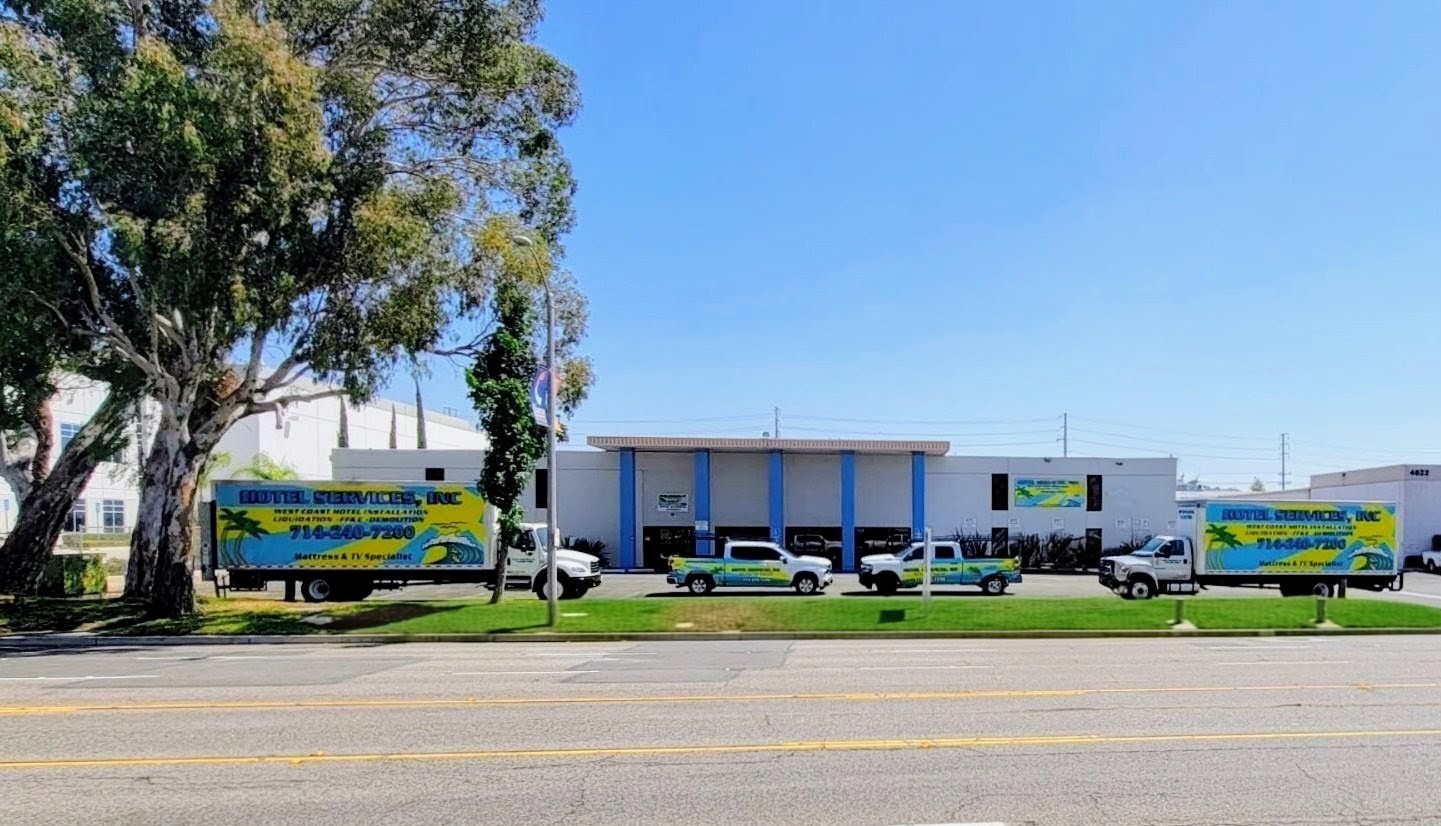
Hotel Services Inc., based in Anaheim at the crossroads of E. La Palma and Lakeview near the 91 and 55 freeways, provides complete FF&E installation and project coordination for Los Angeles and Southern California hotels. Their team handles contractor coordination, case goods movement, full room outfitting, quality inspections, and timeline management. This kind of local expertise ensures your imported furniture is installed correctly, on time, and with minimal disruption to your guests.
The choice between handling installation yourself and partnering with a specialized firm often determines project success. Professional installation crews understand hotel operations, can work around guest schedules, and carry insurance to protect your property. For Los Angeles properties operating during renovation, this is not a luxury—it’s a necessity.
Conclusion: Making the Import Decision Work for Your Los Angeles Hotel
Importing hotel furniture directly from China in 2026 remains one of the most effective ways Los Angeles hotel operators can reduce FF&E costs without compromising on specification quality. The savings are real, the customization options are extensive, and the process is well-established—but it requires a different kind of preparation and a clear understanding of where mistakes are made.
Start by building a detailed specification, identifying and qualifying genuine manufacturers in Foshan, managing samples carefully, and arranging professional quality control and shipment. Understand your tariff exposure category-by-category. Work with a customs broker who specializes in furniture. Plan for 6–12 months of lead time depending on project scale. And partner with local Los Angeles installation professionals who can deliver your imported furniture on time, to specification, and with the professionalism your guests expect.
The complexity is real, but so are the rewards. For Los Angeles hotels serious about controlling FF&E costs while maintaining quality, direct import from China remains the market standard.