For hotels in Los Angeles, importing furniture in 2026 is no longer simply a matter of selecting a manufacturer, booking a container, and waiting for delivery. Tariff changes, shifting trade policy, stronger import demand, port-volume uncertainty, and a crowded renovation calendar are making timing and documentation just as important as price. The result is a new operating reality for the Los Angeles hotel furniture supply chain: properties that plan early and build backup options can move faster, while projects that depend on one overseas shipment may face costly delays. This guide explains the most important 2026 supply chain changes, what they mean for hotel furniture imports 2026, and how owners, general managers, designers, and purchasing teams can protect a hotel renovation timeline. It also shows how a local FF&E partner can help Los Angeles hotels combine imported pieces with ready-to-install commercial inventory.
Why the Los Angeles Hotel Furniture Supply Chain Is Changing in 2026
The first change is uncertainty. The Port of Los Angeles adopted a fiscal year 2026/27 budget based on expected cargo demand of 9.3 million container units—7% below its current forecast for fiscal year 2025/26—while specifically citing global trade volatility and uncertainty about trade policy. At the same time, the port reported strong results during much of 2026, including its best-ever June and second-busiest July on record. That combination matters to hotel buyers: cargo is still moving, but the conditions affecting cost, routing, and timing can change quickly.
For Los Angeles hotels, the practical lesson is to stop treating the supply chain as a single fixed schedule. A furniture package may include case goods, upholstered seating, mattresses, lighting, artwork, appliances, and decorative elements sourced from different countries. Each category can have different manufacturing lead times, customs classifications, inspection requirements, and transportation risks.
The U.S. International Trade Commission reported that 2026 Harmonized Tariff Schedule Revision 18 was published on September 2, 2026. That does not mean every hotel furnishing suddenly became more expensive, but it reinforces the need to verify classifications and landed costs before approving a purchase order. A quote that looked competitive in early design development may not remain competitive after duties, brokerage, drayage, storage, and delivery are included.
Speed now depends on decision quality
Importing faster does not always mean ships are traveling faster. More often, it means avoiding preventable pauses. Accurate product descriptions, complete commercial invoices, confirmed dimensions, approved finishes, and early documentation can reduce the risk of holds or rework. So can making a decision about alternates before a shipment is delayed.
That is why the strongest purchasing plans use two tracks: an imported package for custom or brand-critical items, and a domestic or previously used package for products that can be substituted without compromising the guest experience. This approach gives owners more control over the hotel renovation timeline while preserving design intent.
What 2026 Import and Tariff Changes Mean for Hotel Furniture
Trade policy is one of the largest variables affecting hotel furniture imports 2026. In January 2026, the Associated Press reported that increased tariffs on upholstered furniture, kitchen cabinets, and vanities had been delayed for one year amid continuing trade discussions. However, the delay did not eliminate uncertainty. Later developments included new tariff actions involving multiple countries and continued discussion of additional measures affecting China.
For hospitality projects, the key issue is not just the headline tariff rate. It is the total delivered cost and the time required to confirm that cost. A hotel buyer should evaluate:
- Country of origin: Where the product was manufactured, not merely where it was shipped from.
- Classification: The correct Harmonized Tariff Schedule code for each product category.
- Material composition: Wood, metal, glass, textiles, foam, and mixed-material products may be treated differently.
- Trade remedies: Antidumping or countervailing-duty investigations can affect certain materials and countries.
- Landed cost: Product price plus duties, ocean freight, insurance, port fees, customs brokerage, drayage, warehousing, and final installation.
Hardwood and decorative plywood are examples of materials receiving close trade attention. A July 2026 Federal Register notice addressed preliminary antidumping findings involving hardwood and decorative plywood from Vietnam and referenced related proceedings concerning China. That does not automatically apply to every wood hotel headboard, nightstand, or casegood, but it shows why purchasing teams should ask suppliers for clear material and origin documentation rather than relying on a general “made overseas” description.
Build a tariff and substitution contingency
Before placing an order, identify which items are essential to the brand standard and which can be substituted. Imported custom millwork may deserve a longer lead time and a larger contingency budget. Standard beds, mattresses, lamps, seating, artwork, and televisions may have practical alternatives available through a local inventory provider.
Hotel Services Inc. helps Los Angeles properties evaluate those alternatives through used commercial-grade inventory sourced from four- and five-star hotels. A repurposed furniture package may not replace every custom item, but it can fill rooms, support a phased opening, or prevent a renovation crew from waiting for one delayed container.
Los Angeles Port Conditions and the Case for Earlier FF&E Planning
The Port of Los Angeles remains a major gateway for furniture and building materials entering Southern California. Its 2026 strategic planning emphasizes supply chain efficiency, terminal velocity, technology deployment, and improved predictability for shippers. Meanwhile, monthly cargo briefings have highlighted changing inventory levels, tariff deadlines, global commerce, and strong import activity.
For hotel operators, that means port performance should be monitored alongside factory production. A manufacturer may finish a furniture order on time, yet the project can still lose days or weeks through vessel changes, terminal congestion, container availability, chassis shortages, customs questions, or last-mile scheduling conflicts.
Los Angeles hotels also face a local delivery challenge: dense urban streets, limited loading zones, valet areas, guest traffic, and buildings that were not designed for modern renovation logistics. A container arriving at the region is only one milestone. The furniture still has to be drayed, unloaded, inspected, staged, carried through the property, installed, and removed from the work area without creating unnecessary guest disruption.
Turn one delivery date into several control points
A more reliable FF&E delivery Los Angeles plan includes checkpoints such as:
- Design approval and final product schedule.
- Supplier confirmation of quantities, finishes, dimensions, and country of origin.
- Production completion and pre-shipment inspection.
- Customs and freight documentation review.
- Port arrival, container release, and drayage appointment.
- Local receiving, condition inspection, and room-by-room staging.
- Installation, punch-list correction, and final quality inspection.
Each checkpoint creates an opportunity to catch a problem before it affects hundreds of guest rooms. It also makes communication easier among ownership, purchasing, designers, contractors, freight providers, and installation crews.
For large renovation programs, local staging is particularly valuable. Hotel Services Inc. provides nationwide installation and can coordinate furniture movement, room outfitting, contractor schedules, quality checks, and secure mounting of headboards, wall art, and flat-screen televisions. The objective is not merely to unload furniture; it is to keep the property moving toward reopening.
Los Angeles Hotel Renovation Activity Is Raising the Stakes
Los Angeles, CA, is entering a busy period for hospitality investment. Discover Los Angeles reported that Hilton Los Angeles Airport began a $50 million renovation of its 1,234-room hotel, with the project targeting September 2026. The same update identified additional hotel openings and redevelopments across the region, including the 212-room Jordan San Gabriel and a planned 145-room Mama Shelter Downtown Los Angeles.
Other properties are also competing for contractors, installers, freight capacity, and replacement inventory. The Los Angeles Times reported in July 2026 that Stile DTLA had completed a multimillion-dollar renovation and expanded its concept beyond a limited-service hotel into a broader creative hub. In Beverly Hills, Hilton announced the January 2026 debut of Cameo Beverly Hills, a 138-room luxury property following a complete transformation.
These projects illustrate an important trend: renovation demand is not limited to full hotel closures. Properties may renovate guest rooms in phases, refresh public areas while remaining open, or complete soft-goods upgrades between major events. That makes sequencing more important than ever.
Use local conditions to shape the installation plan
Los Angeles projects should account for event calendars, airport traffic, neighborhood access, elevator restrictions, building rules, and noise limitations. A delivery window that works for an industrial area may be impractical near LAX, Downtown Los Angeles, Beverly Hills, or a high-occupancy resort.
A professional installation partner can help divide the work into manageable zones. For example, crews may complete one floor overnight, stage furnishings in a designated area, or install mattresses and bed sets in a single-day push. This approach can reduce guest disruption while allowing the hotel to keep more rooms available during renovation.
It is also wise to separate “must arrive before opening” items from “can follow after opening” items. A hotel may need beds, mattresses, case goods, lighting, and safety-mounted fixtures immediately, while decorative accessories or selected artwork can be installed during a later phase.
How Los Angeles Hotels Can Import Furniture Faster
The most effective strategy is a blended sourcing model. Import when the design, quantity, and cost justify the lead time. Buy domestically or source repurposed commercial furniture when speed, flexibility, or budget control is more important.
Furniture sourcing Los Angeles hotels can become faster and more resilient when purchasing teams follow a few practical rules:
- Approve the complete room package early instead of releasing items one category at a time.
- Request landed-cost estimates, not factory pricing alone.
- Confirm product dimensions against elevators, corridors, doors, and guest-room layouts.
- Order long-lead custom items first and keep short-lead substitutes identified.
- Inspect samples and finishes before mass production.
- Use local inventory to cover shortages, phased rooms, or opening-critical items.
- Schedule installation only after freight release and receiving capacity are confirmed.
- Maintain a written punch list with owners, deadlines, and acceptance standards.
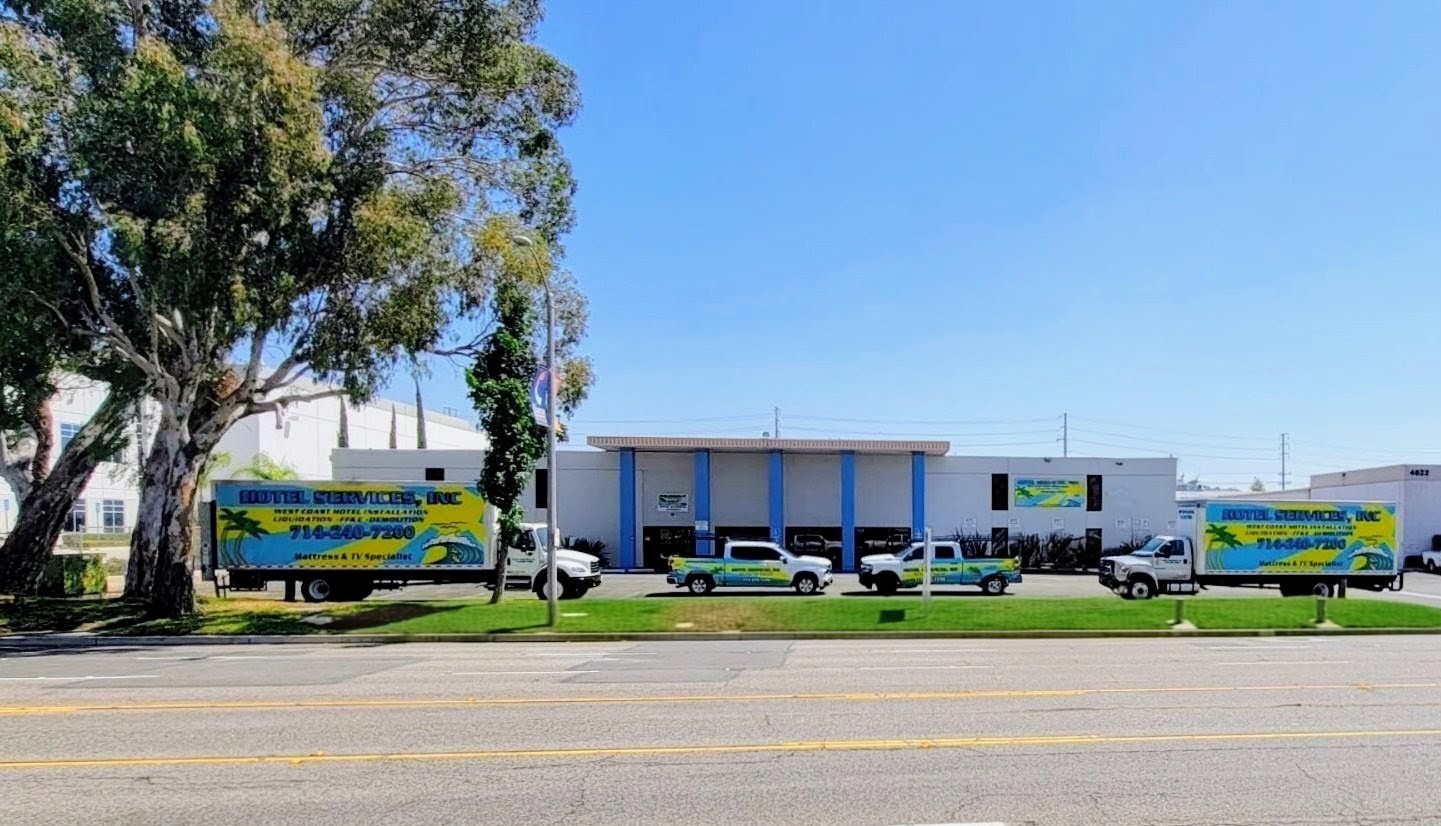
Hotel Services Inc. can support this process from Anaheim, near the 91 and 55 freeways, with furniture liquidation, FF&E sourcing, mattress services, recycling, demolition, and professional installation. Its crews handle commercial furniture removal and placement with attention to floors, walls, doors, elevators, and guest areas. Because the company offers per-item pricing, free estimates, coast-to-coast installation, and English- and Spanish-language service, hotel teams can build a plan around the actual property rather than a generic freight schedule.
Repurposed furniture can also support sustainability goals. Through partnerships with MBC Mattress Recycling and Gateway Mattress Recycling, Hotel Services Inc. helps give mattresses and furnishings a second life. Hotels that purchase repurposed furnishings may qualify for the company’s Green Certificate Program, creating an additional way to document environmental responsibility.
Conclusion: Make 2026 Hotel Furniture Planning More Flexible
The 2026 supply chain environment does not make imported furniture impossible. It makes unprepared importing more expensive and less predictable. For Los Angeles hotels, changing tariff policy, active port conditions, major renovation projects, and tight installation windows all point to the same conclusion: speed comes from preparation, alternatives, and local execution.
Start by reviewing origin, classification, landed cost, and lead time for every major FF&E category. Then create a backup plan for the items most likely to affect opening day. Combining imported signature pieces with commercial-grade used inventory can help protect the budget and keep rooms moving through renovation.
Hotel Services Inc. provides free consultations, furniture liquidation, FF&E installation, mattress replacement and recycling, demolition, and nationwide hotel furnishing support. To discuss a Los Angeles project, call (714) 541-7600 or 888-238-5252. For bid estimates, contact John at (949) 310-2277 or (714) 240-7200.