San Diego Hotels Face Luxury Market Collapse is a provocative headline for 2026, but the market data tells a more nuanced story. San Diego’s luxury and upper-upscale properties are not uniformly collapsing; instead, they are confronting higher renovation costs, changing guest expectations, new competition, and a growing need to recover value from surplus furniture, fixtures, and equipment (FF&E). In 2025, the San Diego Tourism Authority reported 17.4 million hotel nights sold, 72.2% average daily occupancy, and a $213 average daily rate—slightly fewer nights sold than in 2024, but a marginally higher rate. San Diego Tourism Authority lodging statistics show a market under pressure, not one without demand.
For owners, asset managers, and renovation contractors, the practical question is how to protect capital when a luxury hotel refresh, rebrand, conversion, or closure creates thousands of dollars—or millions—in recoverable contents. This guide explains the forces shaping the San Diego Hotels luxury market in 2026 and presents hotel FF&E recovery strategies that can turn unwanted case goods, mattresses, lighting, artwork, and outdoor furnishings into revenue, reuse, or documented environmental value.
San Diego Hotels Face Luxury Market Collapse—or a Luxury Market Reset?
The phrase “collapse” may capture the anxiety surrounding the San Diego Hotels luxury market, but current indicators point toward a reset rather than a total breakdown. The city and county continue to benefit from leisure travel, conventions, coastal tourism, major events, and high-value resort demand. At the same time, hotel operators are dealing with slower growth, elevated labor expenses, insurance costs, financing challenges, and guests who expect visible improvements every time they return.
San Diego’s 2025 tourism figures illustrate the tension. Hotel room nights available increased from 23.6 million in 2024 to 24.1 million in 2025, while hotel nights sold declined from 17.5 million to 17.4 million. Occupancy fell from 74.2% to 72.2%, even as average daily rate rose from $212 to $213. That combination can be difficult for properties with high fixed costs: rates may hold, but fewer occupied rooms must carry more operating and capital expenses.
Meanwhile, upscale inventory is being refreshed and repositioned. The Manchester Grand Hyatt San Diego has been undergoing a comprehensive renovation, with renovated spaces expected to debut during 2026. The Hotel del Coronado completed a more than $550 million, multiyear restoration in June 2025. These projects show that capital is still flowing into premium San Diego Hotels—but owners must be disciplined about what happens to the old interiors.
Why luxury renovations create liquidation pressure
A luxury renovation often requires a complete changeout rather than a partial replacement. A property may remove beds, nightstands, desks, seating, lamps, mirrors, artwork, televisions, appliances, patio furniture, and decorative accessories even when many pieces remain serviceable. The result is a logistical and financial challenge: the hotel needs the rooms cleared quickly, but the outgoing FF&E still has resale value.
That is where hotel furniture liquidation San Diego services become strategically important. A professional liquidator can create an itemized inventory, coordinate removal around the renovation schedule, protect finished surfaces, and direct usable assets toward resale, donation, recycling, or responsible disposal.
What Is Driving San Diego Upscale Hotel Renovations in 2026?
San Diego upscale hotel renovations are being shaped by both deferred capital expenditure and competitive repositioning. According to the San Diego Business Journal’s report on the hotel renovation market, San Diego County Lodging Association Executive Director Fred Tayco described the pandemic as creating a “massive dislocation.” Traditional three-to-six-year refreshes and 10-to-15-year major renovation cycles were disrupted, leaving many owners catching up on deferred work.
That catch-up cycle creates a wave of FF&E movement. Properties that postponed upgrades may now be competing with newer hotels, renovated resorts, and lifestyle concepts that emphasize design, wellness, technology, and food-and-beverage experiences. Guests may not see a property’s capital plan, but they notice worn case goods, dated upholstery, aging mattresses, poor lighting, and inconsistent room presentation.
Local examples: The Del and Manchester Grand Hyatt
The Hotel del Coronado is one of the clearest examples of how a major San Diego-area renovation can affect FF&E planning. Its restoration included refreshed guest rooms, public spaces, the pool area, and new resort experiences. The completed project demonstrates the scale of a luxury repositioning: extensive contents must be removed, cataloged, protected, and replaced without compromising the property’s historic character.
The Manchester Grand Hyatt’s 2026 refresh provides another example of an active competitive market. San Diego Tourism Authority materials describe updates to guest rooms, the pool deck, Sally’s Waterfront Dining, and the Top of the Hyatt lounge. For any large renovation, the old furniture is not simply “trash.” It may be suitable for independent hotels, motels, short-term rentals, home staging, staff housing, or resale through a commercial showroom.
New supply adds pressure—and opportunity
The opening of the Gaylord Pacific Resort & Convention Center in Chula Vista in May 2025 added a major new competitor to the regional lodging landscape. New or newly renovated properties can raise guest expectations across the market. Older San Diego Hotels may respond with phased room renovations, brand conversions, amenity upgrades, or selective replacement of high-visibility items.
For owners, the opportunity is to plan liquidation before demolition begins. A pre-renovation assessment can identify items worth selling separately, items best bundled by room, and items that should go directly to recycling. Waiting until contractors are ready to tear out rooms often reduces recovery value and creates avoidable schedule pressure.
Hotel FF&E Recovery Strategies for San Diego Hotels
Effective recovery starts with treating FF&E as an asset portfolio rather than a miscellaneous pile of used furniture. The best strategy depends on condition, quantity, brand standards, storage availability, labor access, and the renovation deadline.
1. Complete a room-by-room inventory
Start with a documented count of every recoverable category. Include beds, mattresses, box springs, headboards, desks, nightstands, chairs, sofas, lamps, televisions, refrigerators, artwork, window treatments, patio furniture, and decorative items. Record quantities, dimensions, manufacturer information, condition, and photographs.
- Separate reusable assets: Commercial-grade furniture may serve independent hotels, motels, vacation rentals, or home-staging projects.
- Identify restricted assets: Branded items, custom millwork, built-in equipment, and fixtures may require approval before resale or transfer.
- Prioritize high-volume categories: Mattresses, beds, seating, case goods, and televisions can represent substantial recovery value when handled efficiently.
- Document disposal and recycling: Keep records for mattresses, electronics, metal, wood, and other materials diverted from landfill.
2. Use per-item or project pricing—not open-ended labor
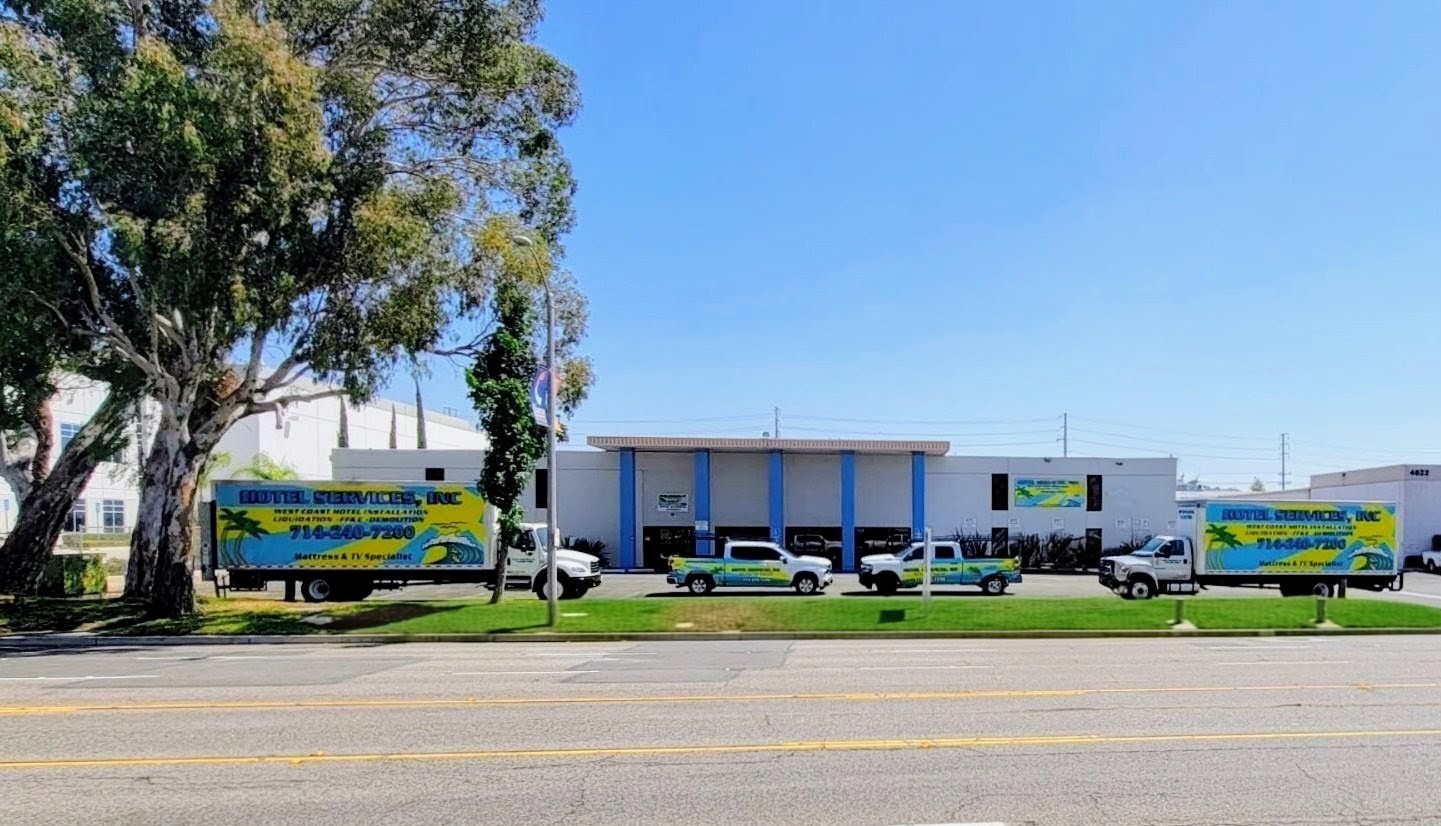
Renovation budgets are easier to control when removal costs are transparent. Hotel Services Inc. provides detailed quotes and per-item pricing rather than relying only on hourly billing. That approach allows an owner or general contractor to compare the cost of removing a room package, a floor, a public area, or an entire property.
A complete scope should define loading, stairs and elevators, dock access, protection of floors and walls, transportation, sorting, storage, recycling, disposal, and final broom-clean requirements. It should also identify the handoff point between the liquidator, demolition contractor, installer, and hotel engineering team.
3. Match liquidation timing to the renovation schedule
Timing is one of the most important hotel FF&E recovery strategies. Remove furniture too early and the hotel may lose rooms or storage capacity unnecessarily. Remove it too late and crews may delay demolition, create congestion, or damage items that could have been resold.
For occupied San Diego Hotels, phased removal can reduce guest disruption. Professional uniformed crews can work by floor, room type, or building section while coordinating with housekeeping and engineering. When a full closure is planned, a rapid bulk removal may be more efficient, particularly for mattresses, box springs, and standardized room packages.
Hotel Furniture Liquidation San Diego: Reuse, Recycling, and Resale
Liquidation does not have to mean sending everything to a landfill. A responsible recovery plan divides FF&E into three channels: resale, reuse, and recycling. Quality used furniture sourced from four- and five-star hotels can be attractive to independent properties seeking commercial-grade pieces at a lower cost than new furnishings.
Hotel Services Inc. sells used furniture including room sets, mattresses, appliances, televisions, artwork, patio furniture, sofa beds, lamps, beds, couches, and other hospitality items. This creates a potential second market for items removed during San Diego upscale hotel renovations. A nightstand that no longer fits a luxury brand’s design package may still be a practical upgrade for a motel or short-term rental.
Mattress recovery deserves special planning
Mattresses and box springs require careful handling because they are bulky, difficult to store, and often subject to different disposal requirements than ordinary furniture. Hotel Services Inc. provides mattress liquidation, bulk removal, installation, and recycling services, working with MBC Mattress Recycling and Gateway Mattress Recycling to divert materials where practical.
For operators evaluating a W San Diego Hotel liquidation or another branded property changeout, it is important to verify the project scope before making public assumptions. A liquidation may involve only selected floors, a renovation phase, a furniture package, or a property-wide replacement. The correct process is to conduct an on-site assessment, confirm ownership and brand restrictions, and build a documented removal plan.
Environmental value can support the brand story
Hotels increasingly need to demonstrate practical environmental responsibility, not just make sustainability claims. Reusing furniture, recycling mattresses, and separating metal, electronics, and other materials can reduce waste while supporting a circular supply chain. Hotel Services Inc.’s Green Certificate Program gives participating hotels documentation recognizing the purchase of repurposed furnishings, creating a potential marketing asset for sustainability-minded properties.
How San Diego Hotels Can Prepare for 2026 FF&E Changes
The most successful operators will begin before the construction schedule is final. A pre-planning meeting with ownership, procurement, the general contractor, design team, hotel operations, and the liquidation provider can prevent costly surprises.
- Set the recovery objective: Decide whether the priority is maximum resale revenue, fastest clearance, sustainability documentation, or a combination.
- Survey the property: Count rooms, public areas, storage spaces, loading routes, elevators, stairs, and restricted-access zones.
- Create a disposition matrix: Mark each category for resale, internal reuse, donation, recycling, or disposal.
- Coordinate dates: Align removal with room closures, demolition, delivery of new FF&E, inspections, and reopening milestones.
- Plan installation separately: A vendor capable of removal may also support replacement furniture, mattress installation, secure mounting, and room setup.
Hotel Services Inc. can support this process with on-site assessments in Southern California and remote solutions for properties outside the region. Its nationwide installation capability, professional crews, English- and Spanish-language service, and 100% work guarantee are designed to reduce disruption while keeping a project moving.
Conclusion: Turn Luxury Market Pressure into FF&E Recovery
The San Diego Hotels luxury market is facing real pressure in 2026, but “collapse” is too simple a diagnosis. The stronger pattern is market separation: properties with dated interiors, deferred capital needs, or weak operating discipline may struggle, while well-positioned hotels invest in design, amenities, service, and efficient renovation execution.
For owners, every renovation should include an FF&E recovery plan. Inventory furniture early, separate resale from recycling, protect valuable items during removal, and coordinate liquidation with construction milestones. Whether the project involves hotel furniture liquidation San Diego services, a mattress changeout, a phased room renovation, or a complete property repositioning, the right partner can convert unwanted contents into recovered value and a cleaner project site.
Hotel Services Inc. provides free consultations and estimates for hotels, motels, and resorts. Call (714) 541-7600 or 888-238-5252. For bid estimates, contact John at (949) 310-2277 or (714) 240-7200.