Every major hotel renovation, Property Improvement Plan (PIP), or brand conversion presents a critical logistical hurdle: what should you do with hundreds of rooms filled with existing case goods, beds, lighting, and seating? Upgrading your guest experience is essential for maintaining brand standards and driving RevPAR, but managing decommissioned assets can rapidly derail timelines and budgets if approached without a clear strategy. Property managers and asset owners typically face a pivotal decision when evaluating how to sell used hotel furniture: liquidation vs. direct sale options. Balancing upfront asset recovery against labor expenses, timeline constraints, and operational disruption dictates whether a project yields positive returns or expensive delays.
While the prospect of selling hotel furnishings piece-by-piece or running an independent sale may sound financially attractive on paper, the operational realities often tell a different story. In this guide, we will break down the mechanics of hotel asset disposition, compare direct selling against professional liquidation, evaluate true operational costs, and help you choose the best path forward for your property.
How to Sell Used Hotel Furniture: Liquidation vs. Direct Sale Options Explained
When it is time to clear out guest rooms and common areas, hospitality leaders generally weigh two primary paths: managing the sale internally or hiring a specialized liquidation company. Understanding how each approach functions on the ground is the first step toward safeguarding your schedule and bottom line.
The Direct Sale Approach: High Theoretical Returns, Real-World Friction
Selling hotel furniture directly typically involves a property attempting to bypass third-party liquidators to sell items straight to the public, local businesses, or independent buyers via classified listings, social media marketplaces, or on-site warehouse sales. The core appeal of this method is maximizing the gross dollar amount recovered per item. Rather than selling in bulk at wholesale rates, the hotel attempts to capture retail or semi-retail pricing for case goods, lamps, upholstered chairs, and flat-screen TVs.
However, direct sales introduce significant operational complexity. To sell items individually or in small batches, a hotel must maintain active on-site storage, dedicate administrative staff to field inquiries and negotiate pricing, and coordinate pick-up appointments. This model invites the public onto active commercial grounds, which creates liability concerns, traffic bottlenecks at loading docks, and security risks. Furthermore, direct sales rarely clear rooms fast enough to keep pace with modern renovation schedules, frequently stranding unsold items when contractors arrive.
Professional Liquidation: Speed, Scale, and Predictability
In contrast, full-scale hotel liquidation transfers the entire logistical burden to an experienced team specializing in bulk FF&E (Furniture, Fixtures, and Equipment) removal. A qualified liquidator inspects the inventory, provides a clear contractual quote, and deploys trained labor to systematically de-install, pack, load, and transport every single piece of unwanted furniture within an agreed-upon window.
Rather than waiting weeks for individual buyers to pick up items, liquidation clears whole floors or wings simultaneously. Liquidators absorb the inventory risk and use their own established distribution networks—including relationships with independent motels, regional property buyers, and export channels—to manage used hospitality furniture resale off-site. For general managers and asset owners, liquidation trades unpredictable retail upside for operational speed, fixed project timelines, and minimal guest disruption.
Hotel Liquidation vs Selling Directly: A Head-to-Head Comparison
Choosing the right disposition route requires evaluating the hidden trade-offs between cash recovery and operational overhead. When analyzing hotel liquidation vs selling directly, four core operational factors determine the most profitable strategy.
- Timeline and Speed of Clearance: Direct sales move at the erratic pace of individual buyers, often taking months to clear a multi-story property. Liquidation functions on a strict industrial timeline, allowing hundreds of rooms to be stripped cleanly in days to keep general contractors on track.
- Labor and Material Handling: Direct sales require hotel engineering or housekeeping staff to stage, move, wrap, and load furniture for retail purchasers. Professional liquidators bring their own dedicated crews, specialized dollies, floor runners, and transport trucks to execute the extraction independently.
- Facility Preservation: Public buyers picking up furniture rarely carry commercial liability insurance and frequently ding drywall, damage baseboards, or scrape elevator cabs. Professional liquidation teams utilize protective padding and structured pathways to prevent property damage during removal.
- Net Financial Yield: While direct selling seems more lucrative per item, the compounding costs of extended room downtime, dedicated staging storage, and allocated staff hours frequently eliminate that premium. Liquidation delivers a single, predictable financial transaction that lets the property reopen and generate revenue sooner.
Managing Timelines and Minimizing Guest Disruption
If your hotel remains partially operational during a phased remodel, guest satisfaction scores must remain paramount. Uncontrolled foot traffic from outside buyers browsing furniture disrupts paying guests, creates noise complaints, and compromises building security. Conversely, an experienced hospitality partner operates like an extension of your staff.
Professional liquidation crews work in uniform, observe designated service elevators, adhere to strict quiet hours, and protect high-traffic corridors with floor coverings and corner guards. By treating decommissioning as a synchronized construction trade rather than a retail tag sale, you preserve the guest experience in operational wings while clearing out renovation zones ahead of schedule.
Understanding Hotel Furniture Liquidation Cost and Value Recovery
A frequent misconception in hotel asset management is that liquidation is strictly an expense or, conversely, a massive cash windfall. In reality, calculating the net hotel furniture liquidation cost involves balancing three variables: the resale value of your specific assets, the labor required to safely remove them, and the logistical hauling costs.
Properties with high-demand commercial-grade case goods from four- and five-star brands can often offset extraction labor entirely through asset value, resulting in a net payout to the hotel or zero-cost removal. For properties with older, heavily worn inventory, the cost of labor, trucking, and responsible disposal may exceed resale value, requiring an operational fee to clear the property. Beware of providers quoting flat hourly rates that incentivize slow work; always seek liquidation partners offering transparent, per-item or project-based milestone pricing with clear cost breakdowns.
Navigating the Used Hospitality Furniture Resale Market
Understanding which pieces retain value in the secondary market helps asset managers forecast their returns and plan room de-installations effectively. Commercial hotel furnishings are engineered for durability, which makes them highly desirable to boutique motels, multi-family housing operators, and short-term rental hosts when retired properly.
High-Value Assets: What Liquidates Best?
Not every item in a guest room commands equal interest in the secondary market. Liquidators categorize inventory based on durability, brand desirability, and logistics:
- Case Goods: Solid wood or high-pressure laminate dressers, nightstands, credenzas, and desks from premium hospitality brands hold exceptional secondary market appeal due to their rugged commercial construction.
- Commercial Seating: Desk chairs, ergonomic seating, durable lounge armchairs, and commercial-grade sofa beds sell quickly when fabrics are clean and mechanisms remain functional.
- Electronics and Lighting: Commercial-grade flat-screen hospitality TVs, modern LED desk lamps, floor lamps, and hardwired wall sconces retain stable liquidation demand.
- Architectural Decor: Oversized mirrors, framed prints, patio sets, and commercial mini-fridges or microwaves can readily be repurposed across hospitality and residential sectors.
Eco-Friendly Disposal and Hotel Mattress Recycling
Mattresses present the greatest logistical and environmental challenge during a hotel refresh. Landfills across the country increasingly reject bulk commercial mattresses or levy heavy tipping surcharges to handle them. At the same time, health regulations and sanitization laws strictly govern the transfer of bedding, making them virtually impossible to sell directly to the public off a loading dock.
Professional hospitality service providers solve this through dedicated recycling partnerships. Rather than dumping bulk bedding into landfills, responsible operators partner with certified mattress recycling facilities—such as Gateway Mattress Recycling and MBC Mattress Recycling—to tear down box springs and mattresses into base commodities like steel springs, cotton batting, polyurethane foam, and industrial wood chips. Not only does this minimize municipal waste, but it can also earn your property formal sustainability documentation, such as Green Certificates, validating your brand’s commitment to circular business practices.
Best Practices for Preparing Your Property for Furniture Liquidation
Whether you manage a boutique 50-key coastal motel or a 1,000-room metropolitan convention resort, early organization drives successful liquidation. Follow these four foundational steps to prepare your property before any removal begins:
1. Conduct a Rigorous Furniture Audit
Walk your property room by room to catalog total counts, dimensions, and realistic physical conditions of all inventory slated for removal. Note broken drawers, torn upholstery, or damaged veneer. High-resolution photos of standard room layouts, representative wear, and loading dock access allow liquidators to formulate accurate valuations without extensive initial guesswork.
2. Align FF&E Installation with De-Installation Schedules
Demolition, liquidation, and new FF&E installation should operate as an unbroken logistical conveyor belt. If liquidation finishes too early, you leave rooms sitting empty and losing revenue; if it runs late, incoming FF&E shipments will face costly storage demurrage charges. Work with a provider capable of coordinating both ends of the supply chain—removing used items on the exact dates that incoming furniture arrives.
3. Map Facility Logistics in Advance
Establish clear loading dock reservations, designated freight elevator usage windows, and approved waste management zones before crews arrive on-site. Identify staging spaces that keep public corridors completely clear. Having building engineers sign off on pathways and wall protection protocols prevents disputes during the extraction phase.
4. Vet Your Service Provider Thoroughly
Ensure any company bidding on your project carries comprehensive commercial general liability, workers’ compensation insurance, and verifiable references from comparable hospitality projects. Confirm whether they use trained, uniformed internal crews or ad-hoc day laborers, and insist on fixed completion deadlines backed by contractual performance guarantees.
Partner with Hotel Services Inc. for Turnkey Asset Solutions
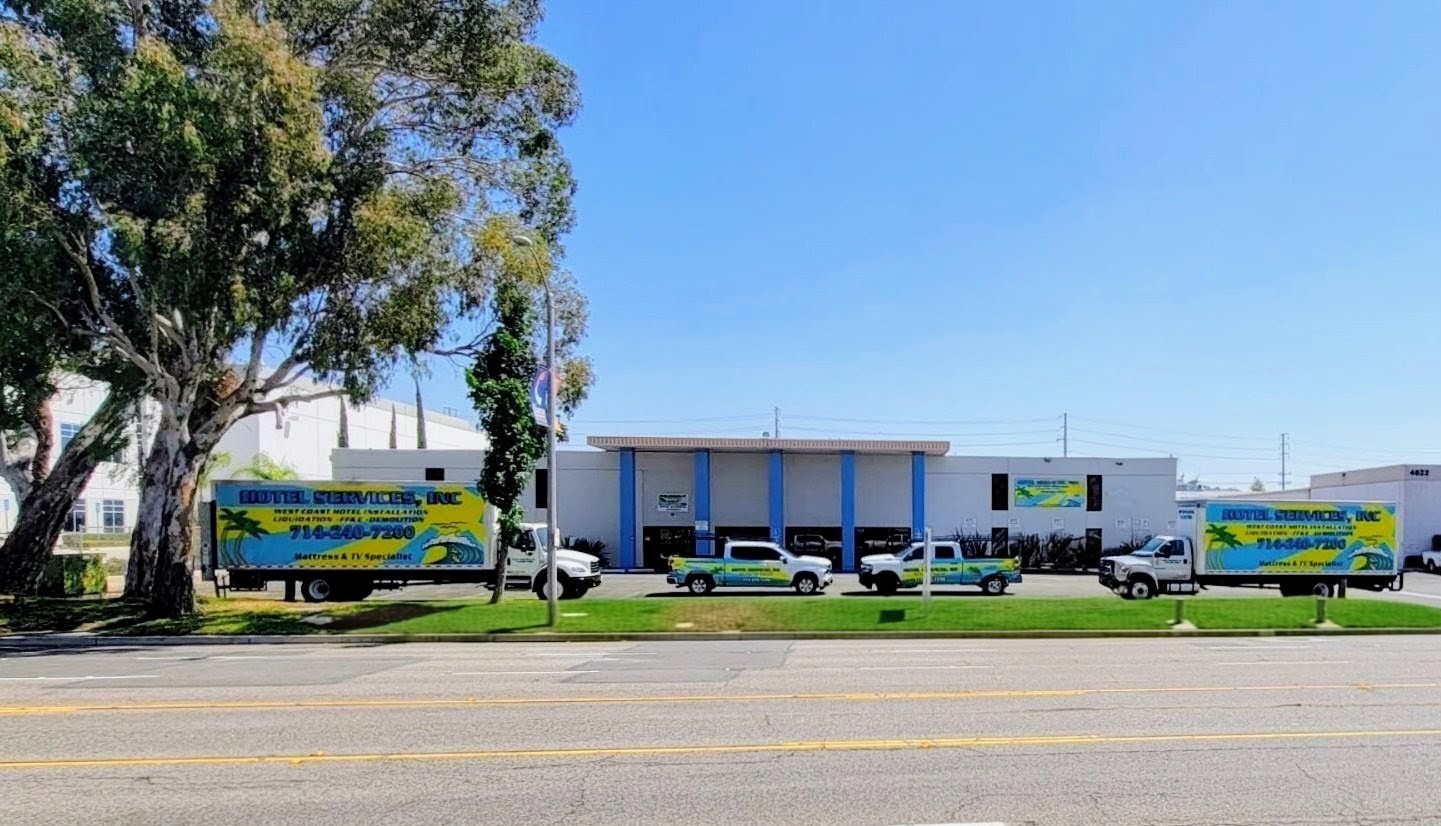
When executing a property transformation, you need an experienced partner rather than a transactional junk hauler. Hotel Services Inc. (HSI) has served the hospitality industry nationwide since 2006. Originally established as West Coast Liquidation, our organization evolved from a dedicated regional liquidator into a complete coast-to-coast hotel furnishing solutions provider headquartered in Anaheim, California.
We believe in offering fair, competitive rates paired with superior customer care. We operate on transparent, per-item pricing—never unpredictable hourly fees—and stand behind every project with a 100% Guarantee on our work. Our professional, uniformed crews specialize in high-efficiency removal designed to protect your physical plant, respect guest quiet zones, and deliver projects on time or ahead of schedule. Notable projects, such as replacing nearly 1,