Newport Beach’s hotel market is entering 2026 with a clear message: properties must feel distinctive, work harder for guests, and remain competitive throughout renovation cycles. More than 30 of Orange County’s largest hotels have undergone renovations since 2020, while the Newport Beach Marriott Bayview is preparing for a property-wide renovation in 2027. At the same time, new and refreshed properties are raising expectations for coastal design, flexible amenities, and environmentally responsible operations.
For hotel owners, developers, and general managers, selecting the right furniture is no longer simply a matter of matching a color palette. The best furnishings must support the guest experience, withstand heavy commercial use, simplify installation, and contribute to a property’s long-term value. This guide explores the top hotel furnishing trends in Newport Beach, CA for 2026, along with practical considerations for renovations, new construction, and phased upgrades.
Hotel Furnishing Trends in Newport Beach, CA for 2026: Coastal Design with a Strong Local Identity
Newport Beach has always benefited from its waterfront setting, but 2026 design is moving beyond predictable nautical themes. Instead of relying on anchors, rope details, or overly literal beach décor, hotels are incorporating refined coastal materials, regionally inspired colors, and furnishings that communicate a sense of place without appearing dated.
The direction is visible in recent local projects. The Bay Shores Peninsula Hotel renovation used a contemporary Cape Cod beachside concept across the building façade and exterior finishes, while also upgrading guest rooms, amenity areas, the roof deck, lighting, landscaping, and furniture. The project transformed a 25-key property into a more polished boutique destination near Newport Bay and the beach. Slater Builders’ Bay Shores Peninsula Hotel project overview provides details about the renovation scope and completion in fall 2025.
What coastal commercial hotel furniture looks like in 2026
Expect to see a more sophisticated mix of:
- Light and medium wood tones paired with warm white, sand, clay, or sea-glass accents.
- Textured upholstery, woven panels, rattan-inspired details, and performance fabrics.
- Curved lounge seating that softens lobbies and creates a residential atmosphere.
- Custom artwork and accessories that reference Newport Harbor, local architecture, or Southern California landscapes.
- Outdoor furniture designed for salt air, sunlight, and frequent use.
This approach is especially valuable for a boutique hotel Los Angeles designers or hospitality teams may be comparing with Newport Beach properties. Guests increasingly expect visual storytelling, but they also want spaces that feel comfortable rather than themed. A hotel furniture supplier can help owners combine locally appropriate design with durable case goods, seating, beds, lighting, and accessories sourced for commercial use.
Residential-Style Guest Rooms and Social Lobby Spaces
Another major trend for 2026 is the continued blending of hotel and residential design. Guests want hotel rooms to feel welcoming and functional, while lobbies are becoming places to work, socialize, dine, and relax rather than merely pass through during check-in.
For guest rooms, that means replacing one-purpose furniture with pieces that support several activities. A compact desk can double as a vanity. An upholstered bench can provide luggage seating without blocking circulation. Lounge chairs, nesting tables, and integrated bedside storage can make rooms feel more like well-designed apartments while preserving valuable floor space.
Flexible public areas increase the value of every square foot
Newport Beach’s hospitality market includes luxury resorts, boutique properties, meeting hotels, and extended-stay accommodations. Each benefits from public areas that can change throughout the day. A lobby may serve as a breakfast area in the morning, a remote-work environment during the afternoon, and a cocktail or event setting in the evening.
Furniture selection should therefore prioritize:
- Movable tables and lightweight lounge pieces that staff can reconfigure quickly.
- Commercial-grade upholstery with stain resistance and easy replacement options.
- Power access near worktables and seating areas.
- Banquettes and modular seating that define zones without permanent construction.
- Durable outdoor furnishings for patios, pool decks, roof decks, and waterfront spaces.
Lido House, Autograph Collection, illustrates how Newport Beach hotels are expanding beyond conventional room renovations. Its current project includes a new meeting space, a private event and dining venue, and five new cottages anticipated to debut in mid-2026. Lido House’s official renovation information highlights the importance of flexible spaces and cottage-style accommodations in the property’s next phase.
For operators planning a hotel opening Los Angeles CA or a Southern California renovation, this residential approach offers a useful lesson: design the furniture package around how guests actually use the space, not just how the room appears in a floor plan.
Flexible Cottages, Suites, and Extended-Stay Furnishing Packages
Newport Beach’s 2026 furnishing plans are also being influenced by a wider range of accommodation types. Cottages, suites, vacation-style rooms, and short-term rental units require more than a standard king-room package. They need furniture that supports longer stays, couples, families, business travelers, and guests who want a private residential experience near the coast.
Dedicated cottage accommodations are part of the Lido House expansion, while new boutique projects are emphasizing upgraded roof decks, dining areas, and lifestyle amenities. These spaces require coordinated furniture packages rather than isolated product purchases. Seating, beds, lighting, dining furniture, case goods, outdoor pieces, and accessories must work together in both style and scale.
Designing for flexibility and replacement
Modular and easily replaceable furnishings are particularly valuable in Newport Beach because hotels often renovate in phases. A property may refresh a sample room first, upgrade public spaces next, and complete guestrooms during lower-demand periods. Standardized components make it easier to maintain a consistent look while minimizing downtime.
Useful choices include:
- Bed frames and headboards that can be installed or removed efficiently.
- Nightstands and desks with replaceable tops or hardware.
- Stackable or nesting dining chairs for suites and event areas.
- Outdoor seating collections with interchangeable cushions.
- Case goods available in matching finishes across several room types.
Repurposed commercial hotel furniture can also help owners furnish secondary rooms, staff areas, model rooms, or temporary spaces without purchasing every item new. Quality used furniture sourced from four- and five-star hotels can offer commercial durability at a lower cost, particularly when paired with professional inspection, delivery, and installation.
For properties that also manage Airbnb or VRBO units, a coordinated hotel furniture staging strategy can simplify procurement across multiple locations. The result is a consistent brand experience without requiring a completely different furnishing process for every room or rental.
Circular, Sustainable, and Reusable Hotel Furnishings
Sustainability is becoming more practical and measurable in hotel renovations. In 2026, Newport Beach properties are increasingly evaluating what happens to furniture after removal, not only what replaces it. That includes resale, donation, recycling, refurbishment, and responsible disposal.
The trend fits Newport Beach’s broader emphasis on luxury paired with environmental awareness. California’s hospitality sector already includes examples of hotels using refillable amenity bottles, recycled-content paper, employee conservation training, and eco-friendly purchasing. California’s CoolCalifornia profile of Casa Madrona Hotel and Spa demonstrates how sustainability can be integrated into daily hotel operations rather than treated as a one-time marketing message.
Furniture reuse reduces renovation waste
When a hotel renovates, unwanted beds, mattresses, couches, chairs, lamps, artwork, patio furniture, appliances, and televisions may still have useful service life. A structured liquidation program can identify resale opportunities before items are sent to a landfill. Mattresses and box springs can also be directed to specialized recycling partners when reuse is not appropriate.
A practical sustainability plan should include:
- An inventory of all furniture, fixtures, and equipment before demolition begins.
- Separate categories for resale, donation, recycling, refurbishment, and disposal.
- Protection procedures for floors, walls, doors, elevators, and loading areas.
- Documentation of removed items and recycling activity.
- A replacement plan based on durability, repairability, and expected lifecycle.
Hotel Services Inc. supports this circular approach through furniture liquidation, mattress liquidation, mattress recycling, and its Green Certificate Program. Hotels that purchase repurposed furnishings can receive an official Green Certificate recognizing their environmentally responsible purchasing. For owners, this can support sustainability reporting while also reducing the cost of furnishing renovation areas.
Durable, Technology-Ready Furniture and Efficient FF&E Installation
The final major trend is less visible but just as important: hotels are choosing furniture that supports technology, operational efficiency, and faster installation. Guests expect convenient charging, reliable lighting, accessible televisions, comfortable work surfaces, and uncluttered rooms. Meanwhile, owners need furnishings that can be installed accurately with minimal disruption to occupied areas.
Technology-ready furniture may include integrated outlets, USB charging, concealed cable management, wall-mounted televisions, task lighting, and bedside controls. These features must be coordinated with electrical plans, wall conditions, fire-safety requirements, and housekeeping access. Poor coordination can create delays, exposed wiring, damaged finishes, or costly rework.
Why professional installation matters
Hotel FF&E installation is more than moving furniture into a room. It can include contractor coordination, case goods movement, room-by-room placement, secure mounting, quality inspections, punch-list completion, and timeline management. Professional crews should also protect finished surfaces and work in a way that minimizes guest disruption.
That is particularly important during phased renovations. Lido House, for example, states that construction activity is scheduled during defined weekday hours while hotel outlets remain open. This illustrates the operational challenge facing many coastal properties: upgrades must happen while the business continues serving guests.
Hotel Services Inc. provides nationwide installation with professional uniformed crews, including secure mounting of flat-screen televisions, wall art, and headboards. The company also offers a 100% Guarantee on its work and aims to complete projects on time or ahead of schedule. Its previous FF&E experience includes replacing nearly 1,000 beds at Hotel Del Coronado, demonstrating the importance of organized logistics on large hospitality projects.
When evaluating commercial hotel furniture for 2026, ask whether each item is durable, serviceable, easy to install, and appropriate for the property’s operating schedule. A lower purchase price does not create value if installation takes too long or furnishings fail under heavy use.
Conclusion: Plan Newport Beach Hotel Furnishings Around the Full Project
The top hotel furnishing trends in Newport Beach, CA for 2026 point toward a balanced approach: coastal design with local character, residential comfort, flexible accommodations, circular purchasing, and technology-ready durability. These trends are not only aesthetic choices. They affect guest satisfaction, renovation timelines, operating costs, sustainability goals, and long-term asset value.
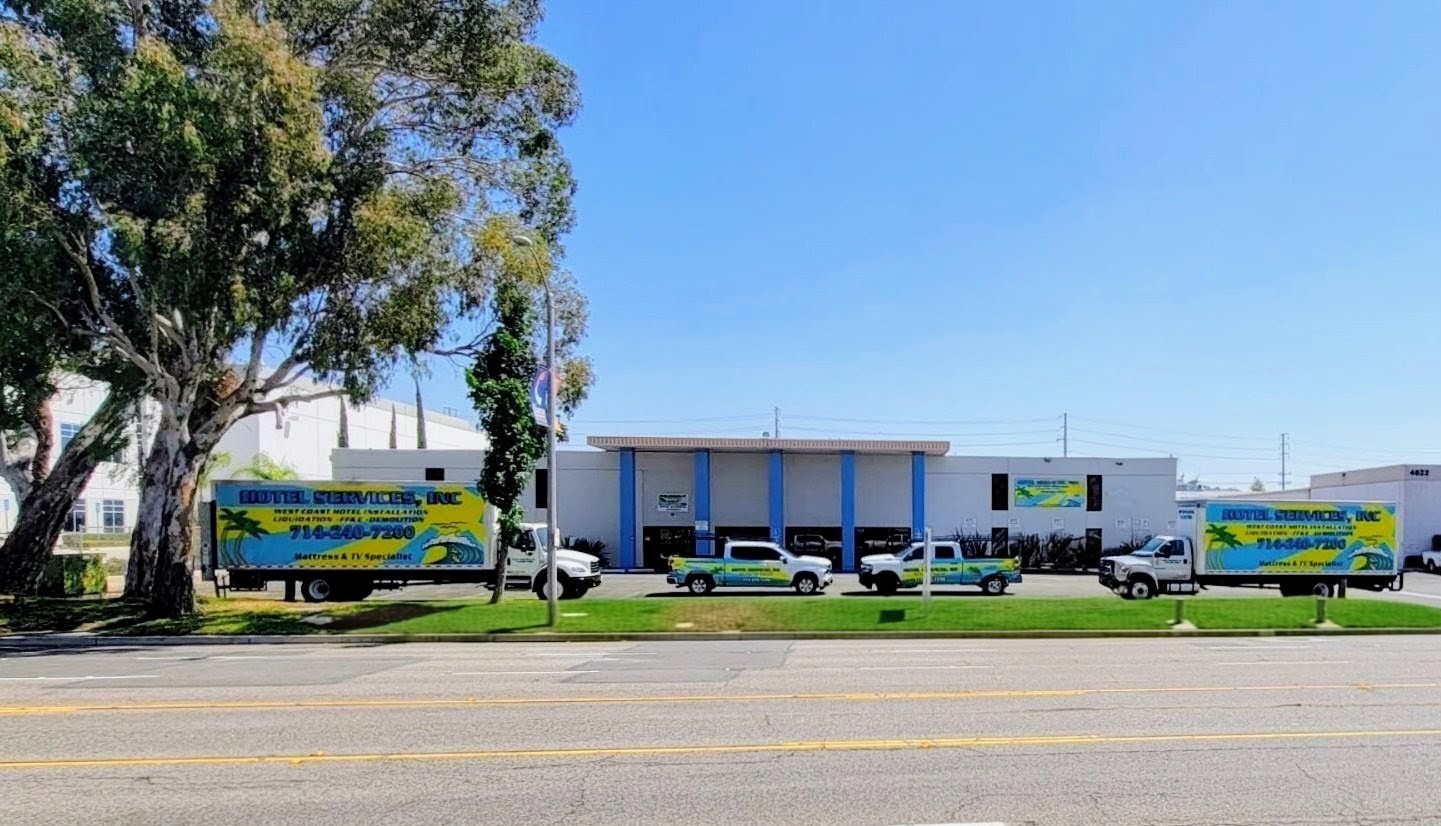
Hotel Services Inc. helps hotels, motels, resorts, boutique properties, and short-term rental operators manage the complete furnishing process—from liquidation and recycling to sourcing, delivery, and professional installation. Based in Anaheim and serving properties nationwide, the company offers free consultations, detailed estimates, English and Spanish support, and per-item pricing rather than hourly billing.
To discuss a renovation, furniture liquidation, hotel furniture staging project, or hotel FF&E installation, call Hotel Services Inc. at (714) 541-7600 or 888-238-5252. For bid estimates, contact John at (949) 310-2277 or (714) 240-7200.